- Is Your Business Sending the Right Credit Signals?
- Understanding the Paydex Score: What It Is and Why It Matters
- Why a Good Paydex Score Is Non-Negotiable in 2025
- How to Achieve a Good Paydex Score
- Strategies to Improve Your Paydex Score
- Monitoring and Managing Your Paydex Score
- Case Studies: Real Businesses That Turned It Around
- Conclusion: Your Paydex Score Is Fixable—and Essential
- You’re Not Alone—This Is the Learning Curve Most Entrepreneurs Miss
- You’re Not Too Late, Too Small, or Too Messy to Fix This
Is Your Business Sending the Right Credit Signals?
In today’s economy, access to capital can make or break your business. Yet too many small business owners don’t even know the score—literally. If you’ve been denied trade terms, quoted high financing rates, or treated like a risky borrower despite paying your bills, your Paydex score might be telling a different story than the one you think you’re projecting.
The Paydex score is one of the most critical but misunderstood numbers in the business credit world. It’s not just a score—it’s a message. A message lenders, vendors, and partners use to decide if your business is reliable, stable, and worth taking a financial chance on.
In this guide, we’ll break down what a good Paydex score really is, how to build and maintain it, and most importantly—how to fix it if it’s already holding you back. Because in 2025’s cautious lending environment, you can’t afford to let hidden credit signals send the wrong message.
Understanding the Paydex Score: What It Is and Why It Matters
What Is the Paydex Score?
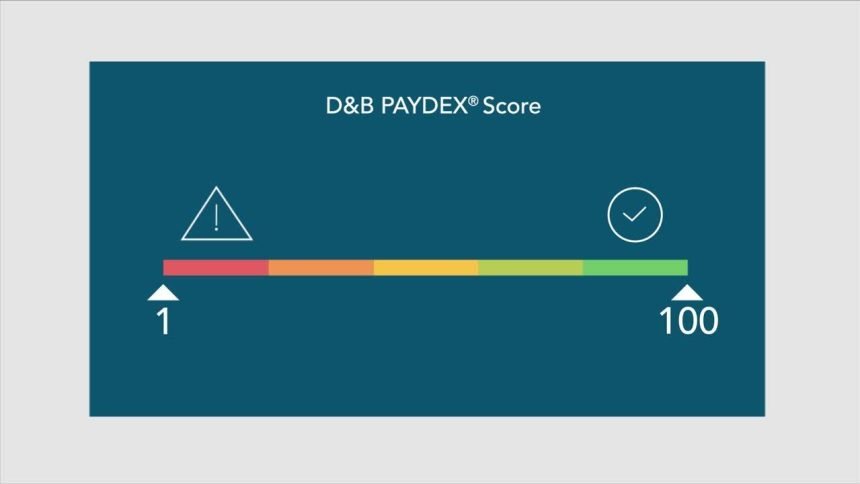
The Paydex Score is Dun & Bradstreet’s proprietary business credit scoring model. It ranges from 0 to 100 and is used to measure how reliably your business pays its bills to vendors and suppliers. The higher the score, the better your business’s payment performance.
Unlike personal credit scores, which factor in utilization, credit mix, and length of history, the Paydex score is almost entirely based on one thing:
How fast your business pays its bills relative to their due dates.
Key Factors That Influence Your Paydex Score:
- Payment Timeliness: Are you paying invoices early, on time, or late?
- Reported Trade Lines: More accounts provide better scoring accuracy.
- Recency and Frequency: Regular recent payments improve your profile.
- Dollar-Weighted Averages: Larger payments carry more scoring weight.
Paydex Score Range Breakdown:
| Score Range | Payment Behavior | Risk Level |
|---|---|---|
| 80–100 | Payments made early or on time | Low risk |
| 50–79 | Payments consistently late | Moderate to high risk |
| 0–49 | Frequently late or no data | High risk |
Why a Good Paydex Score Is Non-Negotiable in 2025
In the current economic climate, banks and vendors are tightening the reins. With inflation lingering, interest rates remaining high, and lending standards more conservative than ever, a strong Paydex score is more than just a checkbox—it’s leverage.
The Benefits of a Good Paydex Score:
- Better Financing Terms: Low interest rates, higher approval odds, and larger credit limits.
- Improved Supplier Relationships: Access to net-30, net-60, and even net-90 terms with no personal guarantees.
- Credibility in B2B Transactions: Partners and enterprise clients often check business credit during vetting.
- Protection from Market Volatility: A strong score gives you access to emergency capital when the economy tightens.
In short: a good Paydex score isn’t just a number—it’s your business’s financial reputation. And in 2025, reputation has never mattered more.
How to Achieve a Good Paydex Score
You don’t need perfect credit or massive revenue to build a great Paydex score. What you do need is consistency, strategy, and attention to detail.
Step 1: Get a D-U-N-S Number
Before you can generate a Paydex score, your business must be registered with Dun & Bradstreet (D&B).
- Apply for a free D-U-N-S number via D&B’s website.
- Make sure your business name, address, and entity structure are accurate.
Step 2: Open Accounts That Report to D&B
Not all vendors and lenders report to D&B. You need trade lines that do.
Start with vendors that are known to report, such as:
- Uline
- Quill
- Summa Office Supplies
- Grainger
- Strategic Network Solutions
These vendors often offer net-30 accounts to new businesses and help build early payment history.
Step 3: Pay Early—Not Just On Time
This is the #1 key to a high Paydex score.
- A score of 80 means you pay exactly on time.
- A score above 80 (e.g., 90–100) means you consistently pay invoices early.
If you’re serious about building a top-tier score, set a policy to pay invoices at least 10 days before they’re due.
Step 4: Build at Least 3–5 Trade References
To generate a reliable Paydex score, your business needs multiple vendors reporting consistent payment activity.
- The more vendors reporting, the stronger and more accurate your score.
- Aim for at least 5 open accounts reporting monthly.
Step 5: Maintain Business Credit Hygiene
- Ensure your business info is consistent across D&B, the IRS, and Secretary of State.
- Keep your business in “good standing” with state filings and compliance.
- Avoid changing your legal name or address unless absolutely necessary.
Strategies to Improve Your Paydex Score
If your Paydex score is lagging—or you don’t have one yet—don’t panic. It’s fixable, and quicker than most business credit issues. Here’s how to improve it fast:
✅ Prioritize Early Payments
- Pay vendors within 15 days if terms are net-30.
- Automate recurring payments where possible.
- Set internal reminders for due dates and grace periods.
✅ Diversify Your Credit Accounts
- Don’t rely on just one vendor.
- Add additional net-30 accounts or revolving vendor credit.
- Be sure each account reports to D&B (call to confirm).
✅ Request Vendors to Report
- Some vendors don’t report by default but will if you ask.
- Call your top vendors and request they submit trade references to D&B.
✅ Dispute Inaccuracies on Your Report
- Review your D&B report monthly for:
- Late payments you know were early
- Incorrect business addresses or EINs
- Missing trade lines
If something looks off, submit a dispute through your D&B dashboard.
✅ Don’t Ignore Small Balances
- Even $20 unpaid to a vendor can drag down your score.
- Make sure small purchases are treated with the same diligence as large ones.
Monitoring and Managing Your Paydex Score
A strong Paydex score requires ongoing attention—not just a one-time setup.
Tools to Monitor Your Score:
- CreditSignal by Dun & Bradstreet – Free tool for score alerts.
- Nav.com – Offers D&B monitoring in paid plans.
- D&B CreditMonitor – Direct access to your business credit reports.
Why Ongoing Monitoring Matters in 2025:
In a year where lenders are increasingly relying on automation and AI risk scoring, a drop in your Paydex score—even temporarily—can trigger:
- Auto-denials of loan applications
- Cancelled vendor accounts
- Downgraded supplier terms
Make it a habit to review your Paydex and other business credit data quarterly, if not monthly.

Case Studies: Real Businesses That Turned It Around
Case Study 1: The Overlooked Boutique
A boutique marketing agency in Austin, TX operated for three years with no Paydex score, despite being profitable. Once they registered with D&B, opened three vendor accounts, and paid early for 90 days, they reached a score of 85—qualifying them for a $50,000 line of credit that had previously been denied.
Case Study 2: From Late to Leverage
A commercial cleaning business in Chicago had a score of 58 due to chronic late payments caused by inconsistent invoicing. After switching to automated accounting software and committing to early vendor payments, their score jumped to 83 in just 6 months, opening doors to government contracts.
Conclusion: Your Paydex Score Is Fixable—and Essential
Your Paydex score isn’t just a number—it’s your business’s financial handshake. It tells potential partners, vendors, and lenders whether your company can be trusted. And in the uncertain credit landscape of 2025, trust is currency.
Whether you’re just starting or trying to bounce back from past mistakes, remember this:
Your score is not your destiny—it’s just a snapshot. And it can be improved.
Start with these simple actions:
- Get your D-U-N-S number
- Open reporting trade lines
- Pay early, not just on time
- Monitor your report regularly
- Ask vendors to report when they’re not
It’s not about perfection—it’s about consistency. Every early payment, every corrected error, every new account is a brick in the foundation of your business’s credibility.
And we’re here to support you every step of the way.
You’re Not Alone—This Is the Learning Curve Most Entrepreneurs Miss
If you’re realizing you’ve ignored your Paydex score until now, you’re not behind—you’re exactly where thousands of other entrepreneurs were just before they took control. Most of us were never taught this stuff. We were focused on running the business, not learning how B2B credit scoring works.
But now you know. And that knowledge gives you power.
Fixing your Paydex score doesn’t require perfect books, fancy consultants, or six figures in revenue. It requires intention, organization, and a bit of patience.
You’ve already taken the first step by reading this. Let’s take the next one together.
You’re Not Too Late, Too Small, or Too Messy to Fix This
Let’s be real: if you’re only now learning about the Paydex score, you’re not failing—you’re just finally getting the information most small business owners were never given.
No one handed you a manual on business credit when you got your LLC. You probably launched your company with grit, not guidance—and you’ve been making it work ever since. That alone is proof of your capability.
But capability doesn’t always equal visibility. And that’s what the Paydex score is about: making sure your responsible financial behavior is seen, recognized, and rewarded.
If your score is missing, low, or even non-existent—take heart. It’s not permanent. Unlike many parts of the financial system, your Paydex score is highly responsive to change. You can start taking steps today and begin seeing movement within weeks, not years.
You don’t need perfect books, a finance team, or a degree in accounting to fix this. You need information, intention, and a willingness to act. You’ve already got the first two. The third? That starts now.
Here’s the truth:
- If you’ve made mistakes, you’re not alone.
- If you’ve ignored your score, you can fix it.
- If you’ve been denied before, this knowledge is your comeback strategy.
No matter how messy it feels right now, your business credit is fixable—and your future is still wide open. Let’s build something stronger from here.