- From Mindset to Momentum
- What Antifragile Really Means (And Why Oversensitivity Costs You)
- How Your Stage Shapes Your Emotional Triggers
- Building an Antifragile Entrepreneur Mindset
- Making Antifragile Money Decisions (And Avoiding Fragility Traps)
- Frequently Asked Questions
- TLDR Summary
- Antifragile Entrepreneur Mindset Checklist
- Your Next Move: Building Strength Through Action
Most entrepreneurs fail because they can’t regulate their emotions long enough to execute a strategy. Feedback feels like personal attacks. Market dips trigger panic pivots. Slow periods become existential crises. You know what to do, but emotional reactivity keeps hijacking your decisions, exactly what the antifragile entrepreneur mindset is built to overcome.
Building an antifragile entrepreneur mindset isn’t about toughening up or positive thinking. It’s about training your brain to use stress as information instead of letting it derail you. The gap between knowing and earning? It’s emotional, not tactical.
From Mindset to Momentum
Stack My Wallet exists on one core truth: change how you think about money, and you’ll change how it moves through your life. Your money framework isn’t just positive thinking. It’s the operating system behind every decision you make about earning, spending, pricing, and growing. When that system runs on fear, scarcity, or validation-seeking, your income reflects it. Scattered focus, inconsistent action, reactive pivots. When it runs on calm confidence and strategic thinking, momentum builds naturally.
The antifragile entrepreneur mindset bridges internal growth with external results. It’s the framework that lets you execute under pressure without losing your mind or money. Most business advice skips this part. You get tactics without the mental foundation to use them.
What Antifragile Really Means (And Why Oversensitivity Costs You)
Nassim Taleb introduced the concept of antifragility in his book Antifragile: Things That Gain from Disorder. Originally a systems theory concept, it applies equally to entrepreneurial psychology. Fragile things break under stress. Robust things withstand stress. Antifragile things get stronger because of stress. Most entrepreneurs aim for resilience, which just means bouncing back. That’s not enough. The antifragile entrepreneur doesn’t survive chaos, they evolve through it.
If you want to explore the original source behind this concept, listen to Antifragile: Things That Gain from Disorder by Nassim Nicholas Taleb on Audible.
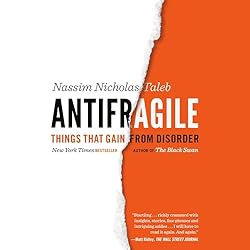
Antifragile Things That Gain from Disorder
4.5 Stars 8,203 Ratings
According to a 2025 survey by Founder Reports covering 227 entrepreneurs across 46 countries, 87.7% of entrepreneurs struggle with at least one mental health issue. Research from the National Institute of Mental Health and UC Berkeley shows that 72% of entrepreneurs are directly or indirectly affected by mental health conditions, compared to just 48% of non-entrepreneurs. The entrepreneurial journey demands more emotional regulation than almost any other path, yet most founders never train for it.
Oversensitivity shows up as taking feedback personally, spiraling when sales dip, avoiding decisions out of fear, or needing constant validation before you act. These patterns drain momentum. Launches get delayed when worry about others’ opinions takes over. Prices stay low when pushback feels like rejection. Uncertainty often triggers early exits from promising strategies. The cost isn’t just emotional. It’s financial. Emotional volatility leads to inconsistent income, missed opportunities, and scattered energy that never compounds into results.
Fragile vs Robust vs Antifragile
| Type | Response to Stress | Entrepreneurial Example |
|---|---|---|
| Fragile | Breaks down, avoids risk | One negative review makes you quit offering a service. A slow sales month convinces you the business is failing. |
| Robust | Withstands stress, stays the same | You endure criticism but don’t change strategy. You survive volatility but don’t learn from it. |
| Antifragile | Grows stronger, improves | Negative feedback reveals a pricing clarity issue you fix. Market volatility teaches you to diversify income streams. |
The Money Methodology Behind Oversensitivity
Emotional fragility in business often traces back to inherited money beliefs. If you grew up hearing “money doesn’t grow on trees” or “rich people are greedy,” your subconscious ties financial success to scarcity or guilt. That programming makes every pricing conversation feel loaded.
Oversensitivity also feeds on validation-seeking. When your sense of worth depends on external approval, business becomes emotionally exhausting. Every sales call feels like a referendum on your value. This need for validation keeps you reactive instead of strategic. You chase trends because everyone else is, not because they fit your model.
These patterns stagnate your business:
- Underpricing and overdelivering to avoid rejection
- Scope creep from inability to hold boundaries
- Burnout from working harder while earning less
Building mental toughness in business means breaking these loops so you can think clearly under pressure and make moves that actually build wealth.
How Your Stage Shapes Your Emotional Triggers
Your entrepreneurial stage determines which emotional triggers hit hardest. Stack My Wallet serves four core audiences, and each faces distinct mindset obstacles that emotional fragility amplifies. A 2025 BDC Canada survey of 1,510 small business owners found that 36% of entrepreneurs report mental health challenges interfere with their ability to work at least once per week. Among entrepreneurs under 40, that number jumps to 60%, compared to just 19% for those aged 50 and over.
Solopreneurs: When Control Turns Into Perfectionism
You’re already running your venture with clients and revenue. The trap is overcontrol. You believe if you just refine the process one more time, you’ll finally feel secure. Instead, perfectionism blocks delegation and drains mental bandwidth. Antifragile solopreneurs embrace iteration over perfection and trust imperfect action over polished paralysis.
Side Hustlers: When Time Scarcity Breeds Hesitation
You’re building secondary income while working full-time. The trap is believing you don’t have enough time to make real progress, so you hesitate or scatter energy across too many ideas. Antifragile side hustlers reframe constraints as clarity. Limited time forces prioritization. You pick asymmetric bets and see time limits as a filter, not a failure.
Early-Stage Entrepreneurs: When Growth Feels Personal
You’re in your first three years. Revenue is inconsistent and every outcome feels like a reflection of your worth. The trap is tying your identity to performance. Antifragile early-stage entrepreneurs separate identity from results. Performance is data, not destiny. You view business as an experiment you’re running, not a verdict on your value.
Pre-Entrepreneurs: When Fear Masks Potential
You’re still employed but exploring the leap. The trap is analysis paralysis. You consume endless content but fear stops you from testing anything. Antifragile pre-entrepreneurs run micro-experiments. Sell one offer before you quit your job. Test demand with a landing page. Small tests build proof and courage without catastrophic risk.
Building an Antifragile Entrepreneur Mindset
An antifragile entrepreneur mindset isn’t built overnight, but it’s built systematically. Five core principles train your brain to respond strategically instead of emotionally.
For daily reinforcement of these principles, check out The Daily Stoic by Ryan Holiday and Stephen Hanselman — 366 brief Stoic meditations that help strengthen focus and emotional control.
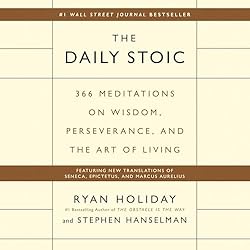
The Daily Stoic 366 Meditations on
Wisdom, Perseverance, and the Art of Living
4.8 Stars 3,331 Ratings
Five Core Principles
1. Exposure: Small Stress Builds Big Strength 💪
Seek micro-doses of discomfort daily. Post content that might get criticized. Make cold outreach. Test pricing that feels high. Each exposure trains emotional tolerance. Start with one uncomfortable action per day.
2. Feedback: Information, Not Judgment 📊
Treat feedback as data about your systems, not your worth. Someone says your offer is too expensive? That’s information about positioning, not proof you’re failing. Ask “what can I learn?” to stay in problem-solving mode.
3. Focus: One Income Path at a Time 🎯
Scatter energy, scatter results. Pick one income path, commit to 90 days of execution, then evaluate. No pivots based on one bad week. Depth beats breadth.
4. Redundancy: Buffers Create Freedom 🛡️
Build buffers in time, cash, and energy. A three-month expense cushion lets you say no to bad-fit clients. Buffers absorb shocks so volatility doesn’t derail you. Financial independence philosophy starts here.
5. Ownership: Skin in the Game ✋
Take full accountability. No blaming the algorithm, economy, or bad luck. If you caused it, you can fix it. Every mistake becomes a learning loop.
The 3F Framework: Fact → Frame → Forward
When rejection, failure, or criticism hits, use this quick mental reset. Fact: State what actually happened without emotion. “A prospect said no.” Frame: Choose a useful perspective. “Sales is a numbers game.” Forward: Decide your next action. “I’ll reach out to three more prospects today.” This process interrupts emotional spirals and redirects focus.
Weekly Focus Formula
Structure beats willpower. Use a simple weekly cadence. Plan: Every Monday, set three priority outcomes. Act: Execute daily without obsessive checking. Review: Every Friday, analyze what worked and what you’re testing next. This creates calm consistency.
Making Antifragile Money Decisions (And Avoiding Fragility Traps)
Calm confidence improves every financial decision you make. When you’re not emotionally reactive, you price based on value instead of fear. You invest in growth instead of hoarding cash out of scarcity. The antifragile entrepreneur mindset directly impacts income because it governs how you think about money under pressure.
From Fear Spending to Focused Investing
Emotional spending shows up in business too. You buy another course because you’re anxious about knowledge gaps. You hire help impulsively because overwhelm is unbearable. These reactive decisions drain cash without building assets.
Antifragile money decisions start with emotional regulation. Pause before spending. Ask if this investment solves a real bottleneck or just soothes anxiety. Focused investing targets actual growth levers. Strategic spending compounds. Emotional spending just bleeds.
This shift changes how you handle income volatility:
- Build reserves during high-earning periods
- Diversify income streams so one dip doesn’t wreck finances
- Plan for variability instead of panicking during slow months
Common Fragility Traps to Avoid
Watch for these patterns that signal emotional fragility is driving your business decisions:
- Overplanning without execution: You spend months perfecting a business plan but never launch because certainty feels safer than risk.
- Validation chasing: You pivot strategies based on one person’s opinion or one week’s metrics instead of committing to focused execution.
- Over-optimization too early: You tweak ads, funnels, or messaging endlessly before you have enough data to know what actually needs fixing.
These traps share one root cause: emotional reactivity. Slow down, regulate emotions, analyze data, make strategic moves. Growth mindset for entrepreneurs means learning from every outcome, not protecting your ego from every uncomfortable truth.
To build long-term antifragility through structured practice, consider A Handbook for New Stoics by Massimo Pigliucci and Gregory Lopez — a yearlong guide to mastering emotional balance through Stoic exercises.
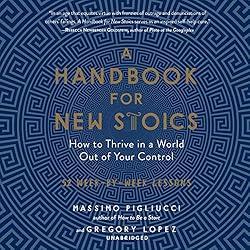
A Handbook for New Stoics
4.5 Stars 406 Ratings
Frequently Asked Questions
| Question | Answer |
|---|---|
| What does antifragile mean for entrepreneurs? | Growing stronger through stress, not just surviving it. Unlike resilience, antifragility uses chaos as fuel for improvement. |
| How do I stop taking business feedback personally? | Separate identity from work. View feedback as data about systems, not worth. Ask “What can I learn?” to reduce reactivity. |
| Can oversensitivity actually hurt my income? | Yes. Emotional volatility causes reactive decisions, delays, and scattered focus. This kills momentum and growth. |
| What’s the difference between mental toughness and emotional suppression? | Toughness regulates emotions, suppression ignores them. Feel fear but choose responses intentionally. |
| How long does it take to build an antifragile mindset? | 30-90 days with consistent practice. Start with small daily exposures. Compound effort beats breakthroughs. |
| What’s one daily practice to build antifragility? | Daily micro-stakes exposure: cold outreach, posting opinions, testing offers. Small stress builds tolerance. |

TLDR Summary
| Area | Action | Result |
|---|---|---|
| Emotional Regulation | Practice 3F Framework daily when triggered | Reduced reactivity, faster recovery |
| Income Focus | Commit to one income path for 90 days | Clearer traction data, compounding momentum |
| Money Decisions | Build 3-month expense buffer | Strategic spending, reduced financial anxiety |
| Feedback Loops | Weekly Plan → Act → Review cadence | Visible progress, learning from outcomes |
| Exposure Practice | One uncomfortable business action daily | Increased risk tolerance, expanded comfort zone |
Antifragile Entrepreneur Mindset Checklist
Phase 1: Foundation
Identify your current entrepreneurial stage (solopreneur, side hustler, early-stage, pre-entrepreneur)
Practice the 3F Framework once daily when triggered
Choose one uncomfortable action to do daily (posting, outreach, pricing test)
💪 You’re building the foundation. Small consistent actions beat big sporadic efforts every time.
Phase 2: Focused Execution
Commit to ONE income path, no new offers or pivots for 60 days
Test one pricing increase or boundary you’ve been avoiding
Build cash buffer, even $500/month adds up
🎯 You’re expanding your comfort zone. Discomfort is data, not danger.
Phase 3: Ongoing Practice
Maintain Weekly Focus Formula indefinitely (Plan → Act → Review)
Build redundancy: grow cash buffer to 2-3 months expenses
Seek micro-stressors intentionally (new audiences, bigger asks, stretch goals)
🚀 You’re living antifragile. Stress becomes signal. Chaos becomes opportunity.
Print this checklist and track your progress offline. Physical accountability beats digital intention.
Your Next Move: Building Strength Through Action
The antifragile entrepreneur mindset isn’t theoretical. It’s practical rewiring that shows up in calmer decisions, clearer focus, and better money moves. Now the work is choosing one small act of exposure this week. Post something that might get criticized. Reach out to someone who might say no. Test pricing that feels slightly uncomfortable.
Entrepreneurial resilience isn’t about avoiding stress. It’s about training your response to it. Each uncomfortable action builds tolerance. Regulating your emotions expands capacity. Over time, strategic decisions compound into income. Change how you think about stress, and you’ll change how it shapes your business. Overcoming fear of failure starts with redefining what failure means. It’s not the opposite of success. It’s feedback on the path to it.
Start small. Build daily. Stack your wins first. The wallet follows.