- What Is Financial Trauma (and Why It’s Not Just a Buzzword)
- The Spiritual Toll: How Money Wounds Starve the Soul
- The 2025 Reality: Financial Trauma Is Getting Worse, Not Better
- Scarcity Isn’t Just a Mindset — It’s a Nervous System Response
- The Subconscious Patterns That Keep You Stuck
- Why Logical Advice Doesn’t Work on Emotional Wounds
- Money as a Mirror: What Your Finances Reveal About Your Inner World
- Pathways to Healing: From Spiritually Bankrupt to Soul-Aligned Abundance
- What to Watch Out for: Spiritual Bypassing in Money Work
- In 2025, Wealth Is No Longer Just About Income — It’s About Wholeness
- Questions to Journal On (If You’re Ready to Go Deeper)
- Final Word: You’re Not Broken — You’re Buried Under a System That Never Taught You Safety
- 💡 What’s Next?
You’re Not Just Struggling With Money — You’re Struggling With What Money Represents
In today’s economy, it’s easy to believe that not having enough money is the root problem. But for many people, especially in 2025’s volatile financial landscape, the real issue runs deeper.
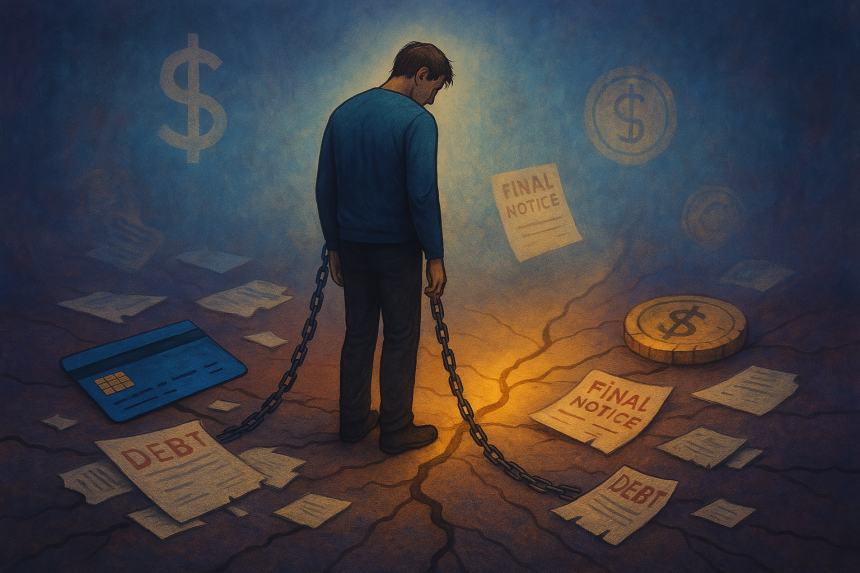
It’s not just about being broke. It’s about feeling spiritually bankrupt — disconnected, discouraged, and drowning in an invisible weight that no budget can fix.
That’s what financial trauma does. It burrows into your subconscious, rewires your beliefs, and shapes your identity. Even as you make more money or gain more financial knowledge, that unhealed trauma whispers:
“You don’t deserve this.”
“You’ll lose it all again.”
“You’re not safe unless you control everything.”
If you’ve ever sabotaged a windfall, felt anxious every payday, or made money only to lose it just as fast… this article is for you.
Let’s pull back the curtain and explore the spiritual cost of unhealed money wounds — and what it takes to start healing.
What Is Financial Trauma (and Why It’s Not Just a Buzzword)
Financial trauma isn’t just “being bad with money.” It’s not solved by a spreadsheet or a side hustle. It’s the emotional and psychological residue of:
- Growing up in poverty
- Being shamed for spending
- Losing everything in a crisis
- Witnessing parental money fights or control
- Being denied access to financial education or opportunity
These experiences lodge themselves into your nervous system and subconscious. Over time, they alter how you:
- See yourself
- Trust others
- Manage risk
- Handle success
- Interpret worth and safety
You may develop hyper-control, hoarding tendencies, or avoid money altogether. And worst of all? You probably think it’s your fault.
The Spiritual Toll: How Money Wounds Starve the Soul
In a society that equates money with freedom, worth, and identity, being financially unstable can feel like a personal failure. But what happens when that instability becomes internalized?
You stop dreaming.
You stop trusting.
You start settling.
Here are common signs you’re spiritually bankrupt from financial trauma:
- 😔 You feel chronically anxious — even when bills are paid
- 🚫 You avoid logging into your bank account out of fear
- 🛑 You turn down opportunities because you “don’t deserve more”
- 📉 You’ve stopped setting goals — survival is all you can manage
- 🔄 You repeat self-sabotaging patterns (spending, undercharging, ignoring debt)
This isn’t laziness. It’s self-protection.
When your nervous system has been trained to associate money with chaos, fear, or shame, you’ll unconsciously block growth. You’re not failing — you’re just still bleeding from a wound you didn’t cause.
The 2025 Reality: Financial Trauma Is Getting Worse, Not Better
Let’s get real. It’s 2025, and the pressure is mounting:
- Inflation has made basic living unaffordable for many
- Credit card debt hit record highs again this year
- Medical bankruptcies and rent burdens continue to grow
- Layoffs and AI-driven job shifts are destabilizing industries
People are hustling harder than ever — and still falling behind.
This constant stress doesn’t just wear down your wallet. It corrodes your faith in yourself. It becomes hard to make good decisions when you’re stuck in survival mode 24/7.
When the system keeps failing you, you start to believe you are the failure.
That’s spiritual bankruptcy — the hollowing out of your trust, hope, and purpose.
Scarcity Isn’t Just a Mindset — It’s a Nervous System Response
You’ve probably heard “scarcity mindset” thrown around like a trendy insult. But let’s clarify something:
Scarcity isn’t just negative thinking. It’s what happens when your body remembers that resources haven’t always been there.
If your upbringing involved:
- Parents stressed about money
- Evictions, repossessions, or food insecurity
- Shaming around purchases
- Lack of safety or predictability
Then your body learned: we are not safe unless we’re in control.
This shows up in your adult life as:
- Panic when money leaves your account
- Guilt when you spend on yourself
- Avoidance of investing or growing
- A deep fear of both success and failure
The solution isn’t “think more positively.” It’s to regulate your nervous system, so money doesn’t feel like life or death every time you interact with it.
The Subconscious Patterns That Keep You Stuck
Financial trauma often creates invisible beliefs that drive your behavior. You may consciously want wealth — but if your subconscious believes it’s unsafe, undeserved, or temporary, you’ll block it.
Here are common subconscious money beliefs rooted in trauma:
| Belief | Root Trauma |
|---|---|
| “I’m not good with money.” | Shamed or excluded from financial conversations growing up |
| “I don’t deserve to be rich.” | Guilt around surpassing family or community |
| “If I have more, I’ll lose more.” | Past loss or betrayal tied to money |
| “People only love me when I’m broke.” | Identity built around struggle or being needed |
| “Wealth is greedy.” | Moral conflict from religious or cultural conditioning |
Unpacking these beliefs is essential for both emotional peace and practical abundance.
Why Logical Advice Doesn’t Work on Emotional Wounds
One of the most damaging things well-meaning financial gurus often say is:
“Just stick to a budget. Stop buying lattes. Hustle harder.”
That’s like telling someone with a broken leg to just walk it off.
If you’ve experienced financial trauma, your brain doesn’t process money logically — it processes it emotionally. Even if you consciously know how to manage money, your body may still go into:
- Fight mode: obsessively controlling every dollar
- Flight mode: avoiding your finances entirely
- Freeze mode: procrastinating bills or income activities
- Fawn mode: giving too much to others to avoid conflict or feel loved
The truth? You can’t out-budget trauma.
Healing requires you to:
- Rewire how your nervous system responds to financial stress
- Redefine your relationship to money as a source of safety, not threat
- Release inherited beliefs that no longer serve you (e.g., “Money is the root of all evil” or “Rich people are bad”)
That’s why spiritual healing is not fluff — it’s foundational. Without it, even the best financial plan will collapse under emotional weight.

Money as a Mirror: What Your Finances Reveal About Your Inner World
Money is neutral. It doesn’t have morality, emotion, or intent.
But we project all our stories, trauma, desires, and fears onto it.
Your relationship with money often mirrors:
- Your relationship with self-trust
- Your ability to receive without guilt
- Your boundaries with others
- Your beliefs about what’s possible for you
When you’re spiritually disconnected, money becomes a battlefield. You either obsess over it or avoid it. You use it to numb, punish, prove, or protect.
But when you’re spiritually aligned?
- You spend with intention
- You invest without fear
- You earn without guilt
- You save without shame
- Healing money trauma doesn’t start with numbers. It starts with identity and belief.
Pathways to Healing: From Spiritually Bankrupt to Soul-Aligned Abundance
The good news? You’re not stuck.
Healing is possible — and it doesn’t require perfection, wealth, or endless hustle. It requires honesty, awareness, and compassion for your past self.
Here are some trauma-informed tools to begin reclaiming your spiritual wealth:
🔹 1. Inner Child Work
- Identify the first memories you have of money
- Write a letter to your younger self who felt scared, ashamed, or left out
- Offer them safety, validation, and new beliefs
🔹 2. Somatic Awareness
- Notice where financial stress shows up in your body (chest, gut, jaw, etc.)
- Use grounding tools: breathwork, EFT tapping, shaking, or walks in nature
- Regulate your body before making money decisions
🔹 3. Rewrite the Script
Create new affirmations that acknowledge past pain while choosing a new future:
“I release the shame tied to money.”
“I trust myself to grow wealth in safe and aligned ways.”
“My financial worth is not tied to my past.”
🔹 4. Create a Safe Money Ritual
- Light a candle
- Put on calming music
- Sit with your finances weekly in a non-judgmental space
- Celebrate small wins — no shame, just presence
🔹 5. Get Support That Feels Safe
Healing trauma often requires community. That might include:
- Therapy (especially trauma-informed or EMDR)
- Financial coaching with emotional intelligence
- Support groups focused on money healing
- Resources like the Stack My Wallet Credit Comeback Plan
What to Watch Out for: Spiritual Bypassing in Money Work
While spirituality can be a powerful tool for healing money wounds, it can also become a form of avoidance if misused. This is called spiritual bypassing — using spiritual ideas to skip over real emotional work.
Watch out for these red flags in money advice:
- “Just manifest it” — without addressing underlying fear, shame, or survival stress
- “If you’re broke, you’re out of alignment” — which can reinforce self-blame
- “Money is just energy, don’t worry about it” — dismissing real material needs
At Stack My Wallet, we believe in both/and:
- Heal your inner world and learn practical financial tools
- Raise your vibration and check your credit report
- Release shame and build a business that pays you what you’re worth
You don’t have to choose between being spiritual or strategic. You deserve both.
In 2025, Wealth Is No Longer Just About Income — It’s About Wholeness
We live in a world where financial stress is now the default. But your nervous system wasn’t built to survive under pressure forever.
Your ability to build wealth, take risks, or even feel peace with your money depends on something deeper than your paycheck: your spiritual health.
If your inner world is in chaos, your outer world will reflect it — no matter how much money you make.
But if your spirit is grounded, your subconscious is safe, and your self-trust is strong?
Then every dollar becomes a tool of expansion — not fear.
Questions to Journal On (If You’re Ready to Go Deeper)
If you’re ready to gently explore the emotional roots of your money patterns, here are powerful prompts to start with:
- What’s my earliest memory of money stress, and how did it make me feel?
- How did my caregivers talk about or behave around money?
- What beliefs did I form about people who have money? What about people who don’t?
- When I think about having more money, what fears come up?
- In what ways do I use money to control, prove, or protect myself?
Journaling isn’t a quick fix — but it starts the conversation between you and your subconscious. That’s where real shifts begin.
Final Word: You’re Not Broken — You’re Buried Under a System That Never Taught You Safety
Read that again.
You’re not lazy. You’re not bad with money. You’re not “behind.”
You’re wounded.
And wounds don’t need judgment — they need healing.
Let this be your invitation to stop blaming yourself and start rebuilding from the inside out.
You don’t have to chase abundance. You just have to become someone who can hold it.
💡 What’s Next?
If this article hit home, don’t stop here.
➡️ Start with the Credit Comeback Plan — a trauma-informed, zero-fluff roadmap to rebuild your credit and your confidence.
➡️ Explore more in the Spiritual Wealth category