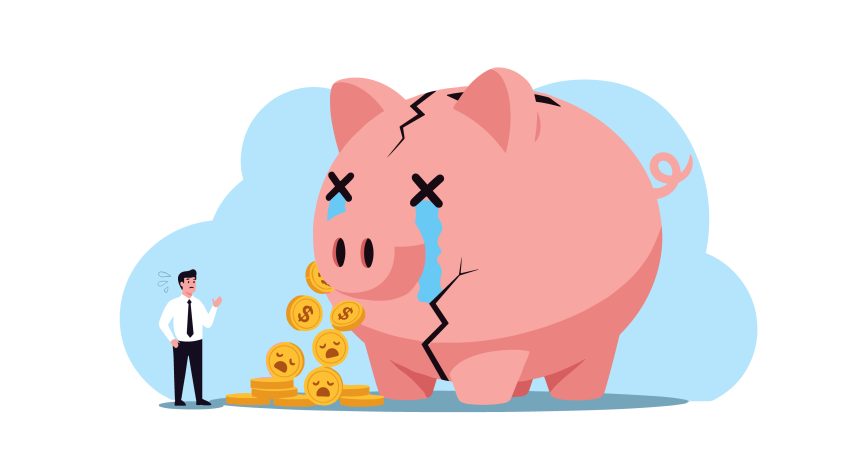
- Why Your Credit Score Is Quietly Draining Your Wealth
- The 2025 Economic Climate: Why Bad Credit Hurts More Than Ever
- Credit Card Interest: Your Everyday Debt Just Became a Trap
- Mortgage Overcharges: The $100K Mistake
- Auto Loans: The Hidden Bleed on Every Car Note
- Personal Loans: The Silent Killer of Wealth
- The Lifetime Cost of Bad Credit
- Real Credit Repair That Works in 2025 (Under Real Conditions)
- You Deserve Financial Power — Not Just Financial Survival
- Fixing It: Your Roadmap to Stop Overpaying in 2025
- Final Word: If You Don’t Fix Your Credit, You’ll Keep Getting Robbed
- 📚 References & Sources
Why Your Credit Score Is Quietly Draining Your Wealth
Still think your credit score doesn’t matter? That it’s just a number lenders use to be nosy? That’s a financial fantasy — and in 2025, it’s costing you thousands in hard-earned dollars.
Poor credit doesn’t just hold you back. It punishes you.
In today’s economy — even as inflation slows and the Fed cuts rates — bad credit is still a financial sentence. The interest rate spread between good and poor credit borrowers is wider than ever, and lenders aren’t handing out mercy just because the Fed’s easing off.
Want to know how much you’re actually losing? Keep reading. We’re about to expose just how brutally expensive bad credit really is — in dollars, percentages, and missed wealth.
The 2025 Economic Climate: Why Bad Credit Hurts More Than Ever
As of mid-2025, here’s where we stand:
- Federal Funds Rate: Now at 4.25–4.50%, following rate cuts after 2024’s peak tightening cycle.
- Mortgage Rates: Averaging 6.67% for a 30-year fixed (down from 7.8% highs in 2023).
- Consumer Inflation: Slowing overall, but sticky in housing, insurance, and services, which keeps lenders defensive.
So yes, the macro economy is cooling. But for the average borrower with a FICO under 670, interest rates have barely budged. Lenders are padding margins, credit card APRs remain sky-high, and subprime borrowers are footing the bill.
Credit Card Interest: Your Everyday Debt Just Became a Trap
2025 Credit Card APR Breakdown
- National average APR for new offers (June 2025): ~23.99%
- Good credit APR (FICO 700+): ~17.1%
- Poor credit APR (secured/subprime cards): ~26.63%+
- APR Gap: A jaw-dropping 9–10 percentage points
You’re not imagining it — your wallet’s leaking money.
What That Actually Costs You
Let’s say you carry a $7,000 balance and pay $250/month:
- Good Credit (17.1% APR): You’ll pay ~$2,700 in interest over ~3 years
- Bad Credit (26.63% APR): You’ll pay over $4,500 — nearly $1,800 in overcharges
And if you’re only making minimum payments? You’re dragging that debt out over decades and paying 3x more.
National Impact
- Total U.S. credit card debt (Q1 2025): $1.324 trillion
- Delinquency Rate: 3.23%, rising as consumers with low scores spiral into rollover debt
Let’s be blunt: if you have bad credit, your credit card isn’t a tool — it’s a trap.
Mortgage Overcharges: The $100K Mistake
2025 Mortgage Rates by Credit Score (30-Year Fixed)
| FICO Score | APR | Monthly Payment (on $500,000) | Total Interest (30 years) |
|---|---|---|---|
| 760–850 | 7.24% | ~$3,409 | ~$622,000 |
| 620–639 | 7.84% | ~$3,678 | ~$723,000 |
Overpaying ~$270/month = $97,000+ in lifetime interest.
That’s not a typo. Your lower score can literally cost you a full six figures.
Co-Borrower Penalty
Applying with someone who has poor credit (<640)?
- Adds ~$437/month
- Over 12 years = $63,000+ in added interest + insurance costs
Market Reality
- 78.9% of all new mortgages go to super-prime borrowers in 2025
- Only 4.7% to subprime — and they’re getting the worst terms on the board
So ask yourself: Are you really ready to give up a house-sized amount of wealth… just because you ignored your credit?
Auto Loans: The Hidden Bleed on Every Car Note
Average Auto Loan APR by Credit Tier (Q1 2025)
| Credit Tier | New Car APR | Used Car APR |
|---|---|---|
| Superprime (720+) | 5.18% | 6.82% |
| Prime (660–719) | 6.70% | 9.06% |
| Near-Prime (620–659) | 9.83% | 13.74% |
| Subprime (580–619) | 13.22% | 18.99% |
APR differences of 8–13% between prime and subprime. That’s not a gap — that’s a chasm.
Cost Breakdown
For a $30,000 new car, 60-month loan:
- Prime (6% APR): ~$4,799 total interest
- Subprime (18% APR): $12,553 total interest
That’s a $7,700 overpayment — for the same car.
Personal Loans: The Silent Killer of Wealth
APR Tiers in 2025
| Credit Tier | Estimated APR |
|---|---|
| Excellent (720+) | 9% or less |
| Fair (630–689) | 15–18% |
| Poor (<630) | 27–36% |
Many states cap personal loan APRs at 36% — and poor-credit borrowers often hit that ceiling.
Real Example
A $15,000 loan over 60 months:
- Good credit (9%): ~$3,600 interest
- Bad credit (27%): ~$11,700 interest
That’s $8,100 gone — money you could’ve used to build your business, fund your emergency savings, or escape debt altogether.

The Lifetime Cost of Bad Credit
Let’s sum it all up.
| Loan Type | Overcharge from Bad Credit |
|---|---|
| Credit Cards | ~$1,800 per $7k balance |
| Mortgage | ~$97,000 per $500k loan |
| Auto Loan | ~$7,700 per $30k vehicle |
| Personal Loan | ~$8,100 per $15k loan |
Now consider this: Most Americans hold all four types of debt at some point.
The lifetime wealth loss from bad credit? Easily $100,000+, not including missed opportunities or rising costs from late fees, insurance premiums, or lack of access to better financing.
Bad credit isn’t just expensive — it’s financially life-altering.
The Emotional and Economic Weight of Bad Credit (And How to Get Unstuck)
Let’s pause for a second and go deeper than numbers.
Yes — the dollar amount you overpay with bad credit is devastating. But if we’re being real, the emotional toll hits even harder.
Because bad credit isn’t just a math problem — it’s a mental weight, a confidence crusher, and often the product of things that weren’t entirely in your control.
So if you’re reading this with a 520 or 620 score and feeling that pit in your stomach — like you’ve been financially failing — here’s the truth:
You’re not broken. The system is.
Credit Trauma Is Real
Maybe your score got wrecked by:
- A medical emergency that wasn’t your fault
- A breakup or divorce where debts got tangled
- A layoff during COVID or inflation spikes
- Simply never being taught how credit works
These aren’t excuses — they’re reality. And while the financial industry punishes you for that reality with higher interest and denied applications, we won’t.
At Stack My Wallet, we believe in financial redemption — and the data backs us up: even a 20–40 point jump in your credit score can save you thousands.
This means you don’t need a perfect 800 to win — you just need to stop the bleeding and shift momentum.
The Catch-22 of Credit and Cost of Living
Here’s the cruel irony of bad credit in 2025:
- You’re being charged more because you have less
- You’re often denied tools that would help you rebuild
- And the stress of financial insecurity makes it harder to focus, sleep, or even show up at work fully
Bad credit creates a self-perpetuating loop:
Low score → higher interest → less room to save or pay down debt → even lower score
This isn’t just financially inefficient — it’s emotionally exhausting.
But there’s a flip side: breaking the loop creates massive upward momentum. You don’t have to clear every dollar of debt today — you just need to flip the direction.
How The Cost of Bad Credit Limits Freedom, Not Just Finances
What you’re really losing with bad credit isn’t just money.
It’s choices.
- Can’t qualify for the apartment you want — or have to put down double the deposit
- Stuck driving a car with a 19% interest loan, while your friend got 4%
- Can’t get a business loan unless you co-sign with your mom
- Paying $300/month more for a mortgage — or getting denied entirely
- Prepaid everything because no company will trust you with monthly billing
These are daily taxations on your freedom. You feel it every time your card declines at a rental counter. Every time you walk out of a dealership humiliated. Every time you get a “no” for financing that could’ve changed your life.
And when you’re stuck in survival mode, it’s harder to dream, let alone build.
But here’s the good news: once you start fixing credit, you start regaining leverage. And leverage is what wealthy people build their lives on.
A 40-Point Credit Score Jump Is Financial Leverage
Here’s what even a moderate score increase can unlock in 2025:
| FICO Score Range | Access/Benefit Unlocked |
|---|---|
| 580 → 620 | Eligibility for FHA home loans (with smaller down payments) |
| 620 → 660 | Lower auto APRs, chance at personal loan approval |
| 660 → 700 | Credit cards with lower APR, cash back, balance transfers |
| 700 → 740+ | Best mortgage rates, preapproval offers, business credit lines |
Each jump isn’t just a number — it’s a new level of access. And access leads to freedom, ownership, and options.
The Myth of “Good Enough” Credit
Maybe your score isn’t “bad bad.” Maybe you’re in that 630–669 “meh” zone and thinking you’re doing fine.
Let us be real with you:
Fine credit is still quietly robbing you.
In 2025, being “just okay” credit-wise is like getting C’s in school — the system might pass you, but you’re missing out on the scholarships.
Let’s say you qualify for a loan at 16% interest instead of 9%. You didn’t get rejected — but you still paid thousands more than someone with a 740.
So don’t settle for survivable. Aim for leverage.
Why Most Credit Advice Online Doesn’t Work
Let’s call out the elephant in the room: most credit repair advice is trash.
- “Just pay off your debt” — with what money?
- “Never use credit cards” — how will you build history then?
- “Get a $99 secured card” — and then what?
Half-baked tips won’t rebuild your financial life. You need a plan rooted in how credit scoring actually works — and one that acknowledges you’re rebuilding under pressure.
So here’s what does work:
Real Credit Repair That Works in 2025 (Under Real Conditions)
This isn’t “manifest and pray” energy. This is practical, strategic, fixable:
1. Prioritize Payment History
- Set every recurring bill to autopay minimums.
- Then focus on catching up one by one. Even partial payments can stop further score drops.
2. Target Utilization Next
- Bring balances down to under 30% of your limits. Under 10% is even better.
- Pro tip: Ask for a credit limit increase. It lowers utilization instantly without paying a dime.
3. Use Tools Designed to Help You Rebuild
- Experian Boost: Adds utility/rent payments to your credit file.
- Self (credit builder loan): Helps you report on-time payments without needing upfront capital.
- Secured cards with reporting + low APR: Look for WalletHub’s 2025 top list — many start around 10–12%.
4. Dispute Errors and Inquiries
- 25%+ of reports contain errors. Removing these can mean an instant 10–40 point boost.
- Services like Credit Karma or Experian offer DIY dispute templates — use them quarterly.
5. Negotiate Debts and Settlements
- Contact creditors and negotiate pay-for-delete agreements.
- Settle old collections (especially medical) and ask for goodwill deletions — especially if hardship was involved.
6. Leverage Positive Accounts
- Become an authorized user on a trusted family member’s card (with no late payments).
- Keep your oldest credit accounts open — age matters.
You Deserve Financial Power — Not Just Financial Survival
Credit is more than a number — it’s economic self-defense. And if you’re living with bad credit, you’re playing life on hard mode.
But here’s what the banks don’t want you to realize:
You can rewrite this story — and the system will be forced to reward you for it.
Fixing your credit is one of the highest-ROI investments you can make. It gives you cheaper debt, better housing, more business options, and the ability to finally stop overpaying just to exist.
And it’s not too late. You’re not too far behind. And you don’t need to be perfect — you just need to start.
Fixing It: Your Roadmap to Stop Overpaying in 2025
Raise Your Score Fast
- Payment history (35%) — never miss a due date again
- Utilization (30%) — pay cards down to <30% of your limits
- Add tradelines: Use Experian Boost to add rent/utilities
- Dispute errors: They cost you real APR points
Use the Right Tools
- Secured cards with low APRs: WalletHub’s top 2025 options offer ~10% APR
- Credit builder loans: Build score without incurring real debt
- Authorized user strategy: Piggyback on someone else’s good history (with consent)
Shop Smarter, Borrow Smarter
- Always prequalify (soft-pull tools only)
- Refinance your auto or personal loan once FICO improves
- Negotiate: 70% of cardholders who ask for lower APRs get it
Final Word: If You Don’t Fix Your Credit, You’ll Keep Getting Robbed
This isn’t fear-mongering — it’s financial reality.
Bad credit doesn’t just block opportunity — it drains your future one interest payment at a time.
📉 $100,000 lost to interest
📉 Monthly budgets choked by inflated payments
📉 Missed wealth, homes, freedom
But here’s the good news: credit is fixable — and fixing it has the highest ROI of almost any financial move you can make.
Start now. Repair your credit. Reclaim your wallet. And never overpay again.
📚 References & Sources
- LendingTree – Credit Card Interest Rates 2025
- TheMortgageReports – Mortgage Rates by Credit Score
- WalletHub – Personal Loan APR Breakdown
- Bankrate – Auto Loan Rates by Credit Tier
- Investopedia – Average Credit Card Interest in 2025
- NerdWallet – How to Negotiate Lower APR
- ExpressNews – Co-Borrower Mortgage Impact
- Federal Reserve Economic Data – Interest Rate Trends