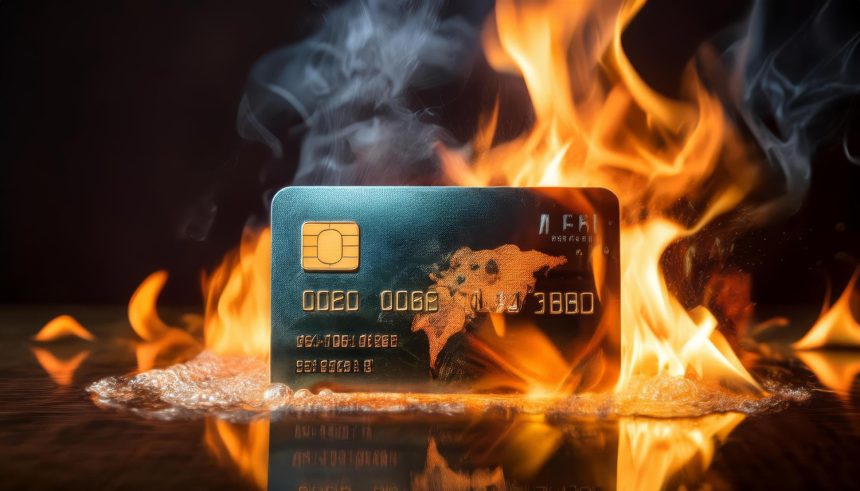
- 🚨 Think You Found a Shortcut? Or Did You Just Light a Match?
- 🔍 What Is Credit Card Stacking, Exactly?
- 💣 Why It’s Popular—But Not Safe
- ⚠️ The Hidden Risks You’re Not Hearing About
- 🤐 The Consultant Trap No One Talks About
- ❌ Myths That Make Stacking Look Safer Than It Is
- 🧯 Smarter Ways to Fund Your Business (Without Burning Your Score)
- 🧭 Feeling Stuck? You’re Not Failing—You Were Just Misinformed
- 🔄 Shift From Survival Mode to Sustainable Growth
- 💡 Real Success Isn’t Just Capital—It’s Capacity
- 🛠️ Already Stacked? Here’s How to Recover Without Shame
- 💬 Final Thought: Don’t Build a Business on a Burning Foundation
🚨 Think You Found a Shortcut? Or Did You Just Light a Match?
Credit card stacking is everywhere right now. Scroll through your feed or hop into a business Facebook group, and someone’s preaching it like gospel: “Stack five personal cards, get $100K in 0% interest, and fund your business—easy.” It sounds like a slick workaround. No banks. No begging. Just you and your ambition.
But here’s what nobody’s saying out loud: credit card stacking isn’t a hack—it’s high-stakes borrowing dressed up as strategy. And in 2025’s tight credit environment, this move could leave your personal credit scorched and your business struggling to breathe.
Let’s dig into what credit card stacking really is, why it’s become so popular, and the financial fire hazards hiding beneath the surface. More importantly, let’s walk through smarter (and safer) ways to get the funding your business needs—without torching your future.
🔍 What Is Credit Card Stacking, Exactly?
At its core, credit card stacking is the process of applying for multiple personal credit cards—often all at once or within a short time frame—to access a large amount of unsecured funding. Usually, these cards come with promotional 0% interest periods, which makes them feel like a brilliant move.
Here’s how it usually plays out:
- A business owner (especially one without strong business credit) wants fast funding.
- They—or a consultant—apply for several personal credit cards with high limits.
- They pull out funds through balance transfers or cash advances.
- The money is then used for business expenses, startup costs, or paying off other debt.
It feels like a win, especially when you’re being sold the idea that you’ve “beat the system.”
But let’s be clear: you’re not using business credit. You’re leveraging your personal credit—and exposing it to risk.
💣 Why It’s Popular—But Not Safe
There’s a reason credit card stacking has exploded in popularity in recent years:
- Startups are desperate for capital but often don’t qualify for traditional business loans.
- Consultants pitch it as a “secret” hack—especially on social media and YouTube.
- 0% interest offers feel like “free money” in the short term.
- Fast access appeals to entrepreneurs who don’t want to wait weeks for approvals.
But when you zoom out, it’s easy to see the warning signs.
In 2025, lenders are pulling back. Interest rates are still elevated. Fintech credit lines are tightening. Credit card issuers are watching for risky behavior—multiple inquiries, aggressive balance transfers, and high utilization.
This isn’t the economic environment to play fast and loose with your personal profile.
⚠️ The Hidden Risks You’re Not Hearing About
So what happens after you stack $50K–$100K in personal cards for your business? You might be sitting on short-term liquidity—but the long-term consequences creep in fast.
Here’s what entrepreneurs who’ve done it wish they had known earlier:
1. Your Personal Credit Score Tanks
- Multiple hard inquiries in a short time = red flags to lenders.
- High utilization (especially if you go over 30%) drives down your score fast.
- If you miss a payment or get close to your limits, it gets worse.
- You’re risking your ability to get a car, mortgage, or even a new phone line.
2. Your Business Is Still Tied to You Personally
- These are personal cards—not business cards.
- If your business fails, you’re still on the hook personally.
- There’s no liability separation. You can’t just walk away.
3. Promo Periods Don’t Last
- Most 0% APR offers expire within 12–18 months.
- After that, rates often jump to 19%–29%+.
- If your business hasn’t generated solid cash flow? You’re now in high-interest debt.
4. Cash Advances Come With Hidden Costs
- Many stacking consultants recommend liquidating cards via cash advances or third-party services.
- These come with fees, and some violate credit card terms.
- It’s not only risky—it could get your card closed or flagged.
5. Repayment Is Not as “Flexible” as You Think
- Minimum payments pile up across multiple cards.
- Missed payments impact your personal credit instantly.
- There’s no grace period if your business hits a rough patch.
🤐 The Consultant Trap No One Talks About
Many people stumble into credit card stacking through funding consultants—some legit, some not so much.
Here’s how the trap is set:
- They promise large amounts of “guaranteed” funding with no upfront business credit.
- Some charge steep fees ($3K–$10K) to “manage” the stacking process.
- Others push you to apply for cards aggressively, damaging your score behind the scenes.
- And once they’ve secured your approvals? You’re on your own to manage the fallout.
Let’s be real: if someone’s encouraging you to max out multiple personal cards without a clear repayment strategy or credit preservation plan, they’re not helping you—they’re selling you.
❌ Myths That Make Stacking Look Safer Than It Is
Let’s break down a few popular myths that make stacking seem more appealing than it actually is:
- Myth: “It won’t hurt your credit if you pay on time.”
→ False. High balances and inquiries still affect your score, even with perfect payments. - Myth: “Everyone’s doing it—so it must be smart.”
→ No. Popular doesn’t equal safe. Especially not in an economy where lenders are watching for risky behavior. - Myth: “You’re building business credit by using these cards.”
→ Not true. Personal cards don’t report to business bureaus. They won’t help your Paydex, Experian Business, or Equifax Business file.

🧯 Smarter Ways to Fund Your Business (Without Burning Your Score)
If you need funding, you’re not out of options. But the path to sustainable growth starts with strategies that don’t sabotage your credit profile or peace of mind.
Here’s what to consider instead:
✅ 1. Business Credit Cards (Under Your EIN)
- Many options don’t require personal guarantees if you’ve built basic business credit.
- They report to commercial bureaus—not your personal file.
- Start with vendors like Brex, Divvy, or cards through established banks once you have a solid business file.
✅ 2. Revenue-Based Financing
- Approval is based on cash flow—not personal credit score.
- Repayment is a percentage of daily or weekly revenue.
- Good for seasonal businesses or eCommerce stores with steady sales.
✅ 3. Fintech Lines of Credit
- Tools like Fundbox, Bluevine, or Ramp offer fast, transparent credit options.
- Many integrate directly with your accounting software.
- You can get short-term capital without touching your personal cards.
✅ 4. Grants + Local Business Development Programs
- Check local business incubators, chambers of commerce, or state-backed programs.
- Grants take longer—but they’re worth the effort for free funding.
✅ 5. Personal Loans with Fixed Terms
- If you must use personal credit, at least consider a fixed-term loan over multiple credit cards.
- You’ll have one monthly payment, clearer terms, and no utilization impact on revolving credit.
🧭 Feeling Stuck? You’re Not Failing—You Were Just Misinformed
Let’s be clear: choosing credit card stacking doesn’t make you reckless, desperate, or irresponsible. It makes you human—someone trying to fund a vision with limited tools, limited time, and a lot of pressure.
Too often, financial systems are built to reward the already established. If you didn’t grow up with access to capital, mentors, or safety nets, it makes sense that you’d turn to whatever options seem available. Especially when everyone online is flexing their wins and hiding their consequences.
But here’s what you need to remember:
A temporary decision doesn’t define your future.
Credit card stacking might have felt like the only option. But there are other ways forward. You can unwind the damage, rebuild your credit, and reposition your business on stronger ground—even if things feel overwhelming right now.
If your credit score has dropped, or if you’re losing sleep juggling multiple minimum payments, it doesn’t mean you’ve failed. It means it’s time for a reset. One rooted in clarity, not panic.
Let’s break down what that looks like, step by step.
🔄 Shift From Survival Mode to Sustainable Growth
The biggest gift you can give your business right now is a stable financial foundation—not just funding, but systems. Structure. Sustainability. Here’s how to gently transition out of the chaos:
📌 1. Acknowledge What’s Working—and What’s Not
You’ve taken action. That matters. Now it’s time to assess:
- Are these cards still helping you move forward?
- Are you profitable yet, or just treading water?
- What are your real funding needs moving forward?
No shame. Just data.
📌 2. Set a 90-Day Stabilization Plan
Short-term goals help reduce panic. Focus on:
- Making on-time payments across all cards.
- Reducing utilization under 50% on at least two cards.
- Avoid any new credit applications or inquiries.
It doesn’t have to be perfect—it just needs to be consistent.
📌 3. Revisit Your Business Model
Many entrepreneurs use credit stacking to mask deeper cash flow issues. Are your margins tight? Are your expenses bloated?
Take this moment to:
- Audit your monthly recurring expenses (software, subscriptions, contractors).
- Explore pricing adjustments or higher-ticket offers.
- Reallocate budget toward income-generating tasks, not just survival.
📌 4. Tap Into Support Networks
You don’t have to do this alone. Consider:
- Free business mentoring via SCORE or local SBA centers.
- Peer masterminds or accountability groups.
- Working with a financial coach who gets the entrepreneurial hustle without shame or judgment.
The right support makes all the difference—especially when you’re rebuilding.
💡 Real Success Isn’t Just Capital—It’s Capacity
Credit card stacking might get you capital. But true success comes from capacity—the ability to weather storms, make decisions from clarity, and build systems that don’t require you to risk everything to grow.
So if you’re here, realizing maybe credit card stacking wasn’t the right move—or you’re trying to avoid it altogether—you’re doing the work. That awareness, that pause, that willingness to learn? That’s what separates businesses that last from those that burn out.
You don’t have to pretend you’ve got it all together. You just have to commit to the next best move.
🛠️ Already Stacked? Here’s How to Recover Without Shame
If you’ve already done credit card stacking, you’re not alone. Many smart, driven entrepreneurs did the same thing thinking it was their only option. The goal now is stabilization and recovery—not guilt.
Here’s your next move:
🔄 1. Stop Applying for New Cards
- Let your inquiries age off. Focus on damage control, not more funding.
📉 2. Strategize Your Payoffs
- Target highest-interest cards first.
- Consider balance transfers (carefully) to reduce your rates.
- Avoid making just the minimums—it’ll keep you in debt for years.
🧾 3. Track All Balances + Due Dates
- Use a budgeting app or spreadsheet to avoid missed payments.
- Set alerts or auto-pay for at least the minimums while you regain momentum.
📈 4. Start Building Business Credit the Legit Way
- Get net-30 vendor accounts that report (like Uline, Quill, etc.).
- Open a business checking account and start separating expenses.
- Apply for small business cards under your EIN as you build profile strength.
🤝 5. Seek Professional Guidance (If Needed)
- A certified credit counselor can help you develop a payoff strategy.
- Business funding advisors can point you toward real options—without smoke and mirrors.
💬 Final Thought: Don’t Build a Business on a Burning Foundation
Credit card stacking gets sold as a fast track to business funding—but what it really does is put your personal credit on the front lines of risk.
In 2025, with lenders tightening their belts and personal credit under more scrutiny, you can’t afford to play games with your score. Especially not for a business you’re trying to grow.
But here’s the good news: your situation is fixable. If you’ve stacked, there’s a way forward. If you’re considering it, there are smarter options. You don’t need to hustle harder—you just need to fund smarter.