- The Foundation Of All High-Income Skills
- Mastering Focus With Deep Work Principles
- Time Management: From Procrastination To Prioritization
- Habit Formation And Sustainable Routines
- Integrating Productivity Systems
- Productivity Mistakes Cheat Sheet
- Book Comparison Table
- Start Here: Your 3-Step Action Plan
- Start Building Your Productivity Foundation Today
The Foundation Of All High-Income Skills
Productivity isn’t about cramming more tasks into your day. It’s about directing your energy toward work that compounds value over time. While most people chase busy, successful people chase focused. That’s why productivity audiobooks have become essential learning tools for entrepreneurs, solopreneurs, and side hustlers who need practical strategies they can implement during their commute, workout, or lunch break.
According to the U.S. Bureau of Labor Statistics, labor productivity in the nonfarm business sector increased 2.4 percent in the second quarter of 2025. Yet research shows employees lose approximately 720 hours per year to workplace distractions, and it takes an average of 23 minutes to refocus after a single interruption. Here’s the disconnect: most people know they should be productive, but few understand how to protect their attention long enough to produce meaningful work.
This is Part 1 of a 5-part series covering the five high-income skills every entrepreneur needs: productivity, communication, personal finance, business strategy, and psychology. Master all five and you’ll have the complete toolkit for building sustainable wealth and business success.
Why Productivity Matters in Wealth and Career Growth
Productivity is the meta-skill that multiplies every other skill you develop. When you master focus and time management, you’re not just checking off more tasks. You’re creating space to build systems, launch offers, and scale income streams that don’t require trading every hour for dollars. Entrepreneurs who develop strong productivity habits close the gap between idea and execution faster than their competition.
Think about it this way: two people with identical skills start side hustles. One masters deep work and ships their offer in 90 days. The other stays scattered and launches six months later. That’s a 90-day revenue head start. Productivity audiobooks teach you how to eliminate that lag time.
What Makes a Productivity Audiobook Effective?
The best productivity audiobooks share three traits: they’re grounded in research, they offer actionable frameworks you can apply immediately, and they respect your time. Avoid books that ramble for eight hours when the core message fits in two. Look for authors who’ve tested their methods in real environments, whether that’s neuroscience labs, Fortune 500 companies, or their own businesses.
Productivity audiobooks work because you can practice the concepts while listening. Queue up a book on deep work during your commute, then immediately test time-blocking when you arrive at your desk. Listen to habit formation strategies during your workout, then stack a new routine into your existing morning flow that same day. The gap between learning and doing shrinks to hours instead of weeks, which is exactly what productivity demands—immediate application that creates feedback loops.
Mastering Focus With Deep Work Principles
Focus is your most valuable asset in a world designed to fracture your attention. Research indicates the average person can maintain about four to five hours of intense cognitive work per day before productivity begins to decline. That window is smaller than most people think, which makes protecting those hours critical. Productivity audiobooks that teach deep work principles help you maximize output during these peak focus periods.
The concept of deep work has reshaped how high performers approach their schedules. Instead of reacting to notifications and bouncing between tasks, they block time for cognitively demanding work and defend it fiercely. This approach isn’t about working longer hours. It’s about working smarter during the hours when your brain operates at full capacity.
📘 Deep Work — Cal Newport
Cal Newport’s Deep Work introduces the concept of focused, distraction-free work as a competitive advantage. Newport argues that the ability to concentrate without interruption is becoming rare, which makes it incredibly valuable. The book provides four philosophies for scheduling deep work based on your lifestyle: monastic, bimodal, rhythmic, and journalistic. Most solopreneurs and side hustlers benefit from the rhythmic approach, blocking one to three hours daily for deep work.
Newport shares a striking example: psychologist Carl Jung built a stone tower in the woods with no electricity or phone line where he retreated to write. While most people can’t build isolation towers, Newport shows how similar principles apply to modern life. One study he cites found that knowledge workers check email or instant messaging every six minutes on average, fragmenting attention so severely that meaningful work becomes nearly impossible.
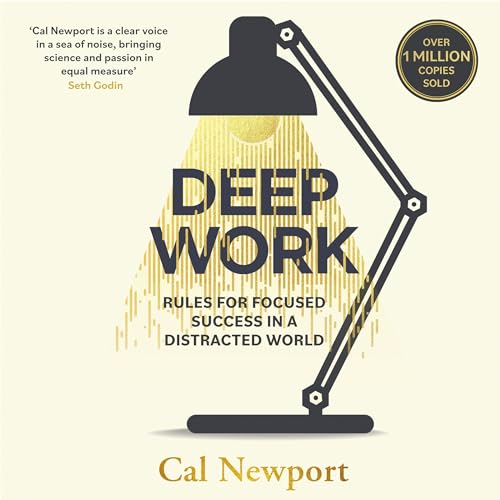
Deep Work
4.5 Stars 2,504 Ratings
Key strategies from Deep Work:
- Schedule deep work blocks during your peak focus hours (most people: 4-5 hours max per day)
- Embrace boredom instead of reaching for your phone during downtime
- Create shutdown rituals to separate work from recovery time
- Train your concentration like a muscle through progressive practice
For anyone who struggles with distraction or feels like their best ideas never get finished, Deep Work reframes how you structure your entire day.
📘 Hyperfocus — Chris Bailey
Chris Bailey’s Hyperfocus explores how to manage your attention by toggling between two modes: hyperfocus for demanding tasks and scatterfocus for creative insight. Bailey spent years experimenting with productivity techniques and distills his findings into practical strategies. The book explains why multitasking kills efficiency and how to train your brain to sustain attention on a single task.
Bailey reveals a counterintuitive finding from his research: deliberately letting your mind wander in scheduled “scatterfocus” sessions actually improves problem-solving and creativity. He describes how breakthrough ideas often emerge during walks, showers, or other low-stimulation activities when the brain enters default mode. One experiment he conducted showed his productivity increased 25 percent after implementing structured attention management.
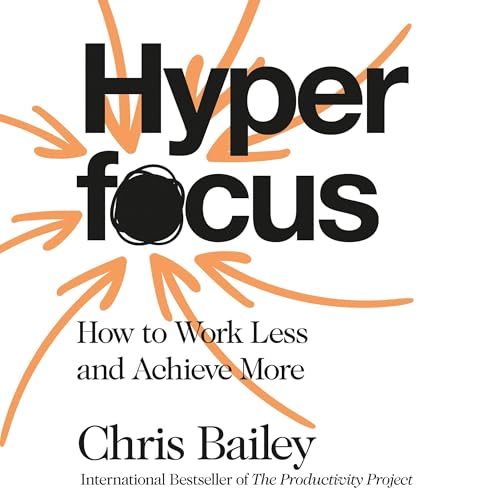
Hyperfocus
4.6 Stars 69 Ratings
Two attention modes Bailey teaches:
- Hyperfocus: Eliminate distractions and work on one task with full cognitive resources
- Scatterfocus: Schedule intentional mind-wandering time for creative problem-solving
- Alternate between modes based on the type of work you’re doing
- Recognize which mode serves your current task best
What makes Hyperfocus valuable is its emphasis on intentionality. Bailey teaches you to choose what deserves your focus rather than letting your environment decide for you. He also covers the science of cognitive energy and why rest periods are essential for maintaining high performance. Anyone juggling multiple projects who needs a system for prioritizing what truly moves the needle will find practical frameworks here.
Time Management: From Procrastination To Prioritization
Time management isn’t about doing everything. It’s about doing the right things and doing them when your energy and focus align. The biggest mistake solopreneurs and side hustlers make is treating all tasks as equally urgent. Effective time management means identifying high-leverage activities and protecting time for them, even when less important tasks feel more pressing.
Procrastination often stems from unclear priorities or decision fatigue, not laziness. When you don’t know what to work on first, your brain defaults to easier, less valuable tasks. The productivity audiobooks in this section provide frameworks for cutting through the noise and taking consistent action.
📘 Do It Today — Darius Foroux
Darius Foroux’s Do It Today tackles procrastination head-on with a no-nonsense approach to getting things done. Foroux argues that overthinking is the enemy of progress and that action creates momentum. The book offers 30 short essays on productivity, each focused on a specific mindset shift or tactical habit.
Foroux shares his personal turning point: after years of analysis paralysis, he committed to a rule—whenever he thought of doing something productive, he’d start it within five minutes or schedule it immediately. This simple shift increased his output dramatically. He quotes Seneca: “It is not that we have a short time to live, but that we waste a lot of it.” The book reinforces this idea that most people aren’t lacking time; they’re lacking decisiveness.
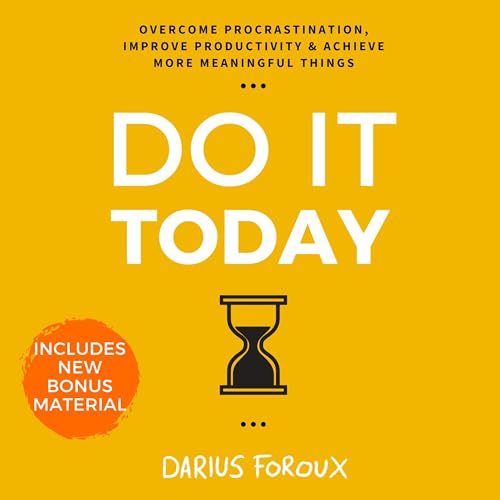
Do It Today
4.2 Stars 49 Ratings
Core tactics from Do It Today:
- Start tasks within five minutes of thinking about them or schedule immediately
- Break big projects into small actions you can complete today
- Eliminate decision fatigue by planning your top three priorities the night before
- Build daily momentum through consistent small wins
What sets Do It Today apart is its simplicity. Foroux doesn’t overwhelm you with complex systems. Instead, he focuses on core principles like starting small, eliminating distractions, and building daily momentum. People stuck in analysis paralysis who need permission to just start will appreciate the directness. It’s also short enough to finish in a few listening sessions, making it ideal for busy schedules.
📘 The Art of Laziness — Ulrich Hoffman
Ulrich Hoffman’s The Art of Laziness challenges the hustle culture narrative by introducing the concept of strategic rest as a productivity tool. Hoffman argues that constant busyness leads to burnout and mediocre work. True productivity requires cycles of intense focus followed by intentional recovery.
Hoffman cites research showing that the most productive CEOs and entrepreneurs often work fewer hours than their burned-out counterparts. He profiles a successful entrepreneur who implemented mandatory “think weeks”—seven-day periods twice a year where he disconnected completely to reflect and recharge. The result was better strategic decisions and increased energy during work periods. Studies show that chronic overwork reduces cognitive function by up to 25 percent, making rest not optional but essential for peak performance.
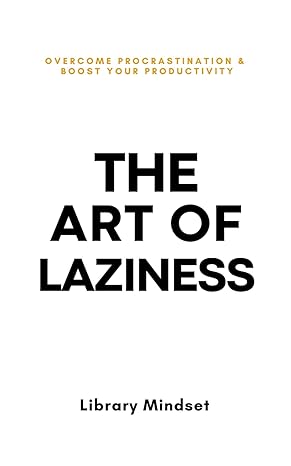
The Art of Laziness
4.4 Stars 3,408 Ratings
Strategic rest principles Hoffman teaches:
- Schedule recovery periods the same way you schedule work sprints
- Protect downtime with the same intensity you protect focus time
- Use rest to improve decision quality, not as a reward for finishing tasks
- Track energy levels to identify when you’re overworking before burnout hits
The book explores how rest improves decision-making, creativity, and long-term performance. Hoffman provides practical strategies for building downtime into your schedule without guilt. Entrepreneurs who feel trapped on the productivity treadmill and need a sustainable approach that doesn’t sacrifice their health or relationships will find the validation and frameworks they need here.
Habit Formation And Sustainable Routines
Habits are the foundation of productivity. When you automate small decisions through consistent routines, you free up mental energy for higher-value work. Research shows that habits account for about 40 percent of our daily behaviors, which means improving your habits directly improves your output. Studies also indicate that willpower functions like a muscle that fatigues with use, which is why relying on motivation alone fails. Building systems that make good habits automatic removes the willpower requirement entirely.
The key to habit formation is starting small and designing your environment to make good habits easy and bad habits hard. This section features a productivity audiobooks that breaks down the science of behavioral change into actionable steps anyone can follow.
📘 Atomic Habits — James Clear
James Clear’s Atomic Habits is the definitive guide to building habits that stick. Clear introduces the concept of identity-based habits, arguing that lasting change comes from shifting who you believe you are rather than what you want to achieve. The book outlines a four-step framework for habit formation: cue, craving, response, and reward.
Clear opens with his personal story: after a devastating baseball injury in high school that fractured his skull, he rebuilt his life through tiny habit improvements. He famously states, “You do not rise to the level of your goals. You fall to the level of your systems.” Research he cites shows that habits account for about 40 percent of our daily behaviors. One study found that it takes an average of 66 days to form a new habit, not the commonly cited 21 days, which explains why so many people fail early.
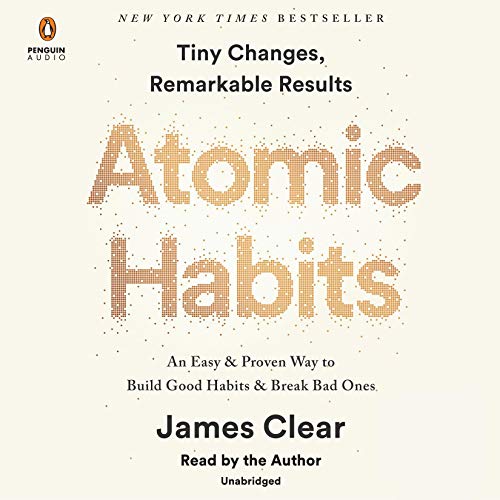
Atomic Habits
4.8 Stars 144,998 Ratings
Habit-building tools from Clear:
- Stack new habits onto existing routines so they become automatic
- Focus on identity shifts (become the type of person who…) rather than outcome goals
- Make good habits obvious and easy, bad habits invisible and hard
- Track small wins to build proof that your new identity is real
Clear also explains habit stacking, a technique where you attach a new habit to an existing one to create automatic routines. For example, after pouring your morning coffee, you review your top three priorities for the day. Small habits compound over time, and Clear provides dozens of examples showing how one percent improvements lead to significant results. Anyone who’s struggled to maintain consistency will find Clear’s writing practical and encouraging, making complex behavioral science accessible. Whether you’re building a side hustle or trying to establish a morning routine, Atomic Habits gives you the tools to make progress sustainable.
Integrating Productivity Systems
Knowing productivity principles is one thing. Implementing them is another. The gap between knowledge and execution is where most people get stuck. Integrating productivity systems means taking concepts from these productivity audiobooks and building them into your daily workflow in ways that feel natural rather than forced.
Start by identifying your peak focus hours. Most people have two to four hours per day when their cognitive energy is highest. Block those hours for deep work and protect them from meetings and shallow tasks. Use time blocking to assign specific activities to specific time slots, which reduces decision fatigue and keeps you on track.
🛠️ Tools & Techniques
Your environment shapes your productivity more than willpower ever will. Remove friction from your most important tasks and add friction to distractions.
Environment design tactics:
- Keep your workspace clear of clutter
- Use website blockers during deep work sessions
- Turn off notifications on your phone and computer
- Set up a shutdown ritual at the end of each workday to help your brain transition from work mode to rest mode
Consider using tools like task batching to group similar activities together, which minimizes context switching. For example, schedule all your meetings on two days of the week rather than scattering them throughout. Batch email responses into two or three time slots per day instead of checking constantly. Small system tweaks compound into significant time savings.3
Productivity Mistakes Cheat Sheet
Even people who consume productivity audiobooks fall into traps that sabotage their results. Use this cheat sheet to identify and fix the most common mistakes that waste time, drain energy, and keep you stuck in busy mode instead of productive mode.
| Productivity Mistake | Why It Kills Your Progress | The Fix |
|---|---|---|
| Collecting systems without implementing them | You’re just accumulating ideas, not building skills that improve your output | Apply one technique for 30 days before moving to the next book or system |
| Trying to optimize everything at once | Cognitive overload guarantees failure when you attempt too many changes simultaneously | Focus on one system at a time, master it, then layer in the next improvement |
| Confusing motion with progress | Reorganizing tools and researching apps gives you a dopamine hit without actual output | Ship work first, optimize systems second |
| Not protecting your peak focus hours | Letting meetings and shallow tasks invade your best cognitive hours kills deep work | Block your peak 2-4 hours daily for deep work and defend them fiercely |
| Underestimating compound improvements | Saving 15 minutes per day feels insignificant but equals 91 hours per year | Track small time savings because they compound into massive advantages |
Book Comparison Table
| Book | Author | Best For | Length | Key Takeaway |
|---|---|---|---|---|
| Deep Work | Cal Newport | Eliminating distractions and building focus capacity | 7 hours | Focus is your competitive advantage in a distracted world |
| Hyperfocus | Chris Bailey | Managing attention and toggling between focus modes | 6 hours | Intentional attention control beats reactive multitasking |
| Do It Today | Darius Foroux | Overcoming procrastination and building momentum | 2 hours | Action creates clarity faster than planning ever will |
| The Art of Laziness | Ulrich Hoffman | Strategic rest and avoiding burnout | 3 hours | Sustainable productivity requires intentional recovery |
| Atomic Habits | James Clear | Building consistent habits that stick | 5.5 hours | Small habits compound into remarkable results over time |
Start Here: Your 3-Step Action Plan
Step 1: Pick Your Starting Point Your biggest challenge right now determines which audiobook to start with. Struggling with distractions? Deep Work is your move. Can’t stay consistent? Atomic Habits will fix that. Fighting procrastination? Do It Today cuts through the noise. Don’t overthink this—pick one and commit to finishing it within two weeks.
Step 2: Track Your Time While Listening Before starting the audiobook, log how you currently spend your work hours for one day. Note every task, distraction, and context switch. Then listen to the audiobook with your actual schedule in mind. When the author describes deep work blocks or time management systems, compare it to your time log. Pause and identify: where are you losing hours? Which distraction patterns could you eliminate first? Turn concepts into specific time blocks on your real calendar.
Step 3: Implement One Technique This Week Pull one strategy from the audiobook and test it for seven days. Maybe that’s time blocking two hours for deep work, building a habit stack into your morning routine, or batching email into two daily windows. One technique, seven days, zero excuses. Track what happens and adjust from there.
Start Building Your Productivity Foundation Today
Productivity comes down to focus, not busyness. The five productivity audiobooks in this guide provide research-backed frameworks for eliminating distractions, managing time effectively, and building habits that make progress automatic. You don’t need all five to start seeing results. Choose the one that addresses your biggest bottleneck, whether that’s procrastination, scattered focus, or inconsistent habits.
The solopreneurs and side hustlers who build sustainable income streams aren’t working twice as hard. They’re working twice as smart by protecting their attention, prioritizing high-leverage tasks, and designing environments that make productivity the default. These productivity audiobooks give you the same tools they use, compressed into formats you can absorb while commuting, exercising, or handling household tasks.
Add these to your playlist and start mastering this skill today.