- The Skill That Separates Good from Great
- Cognitive Bias And Smart Thinking
- Power Dynamics And Influence
- Persuasion And Social Psychology
- Emotional Intelligence And Awareness
- Applying Behavioral Insights Professionally
- Book Comparison Table
- Start Here: Your 3-Step Action Plan
- Start Building Your Psychology Knowledge Today
📚 Part of the “25 Audiobooks To Master 5 High-Income Skills” Series
Part 5 of 5 Psychology Audiobooks — Series Finale | Previously: Productivity Audiobooks ← • Communication Audiobooks ← • Personal Finance Audiobooks ← • Business Audiobooks ←
The Skill That Separates Good from Great
Understanding human behavior separates good entrepreneurs from great ones. According to TalentSmart research, emotional intelligence accounts for 58 percent of job performance across all types of work, and 90 percent of top performers demonstrate high emotional intelligence. People with strong emotional intelligence skills earn an average of $29,000 more per year than those without, with every point increase in emotional intelligence adding roughly $1,300 to annual salary.
Despite these compelling numbers, only 36 percent of people worldwide are emotionally intelligent. This gap creates significant opportunity for those who develop the ability to read people, predict behavior, and influence outcomes ethically. Organizations that prioritize emotional intelligence are 22 times more likely to outperform competitors, according to Six Seconds research. The demand for emotional intelligence skills is projected to grow sixfold in the next three to five years as automation takes over technical tasks.
Psychology audiobooks provide frameworks for understanding what drives human decisions, how to navigate social dynamics, and why people behave irrationally. The five psychology audiobooks in this guide cover cognitive biases, power dynamics, persuasion principles, emotional intelligence frameworks, and human nature patterns. These aren’t abstract theories. They’re practical tools for improving sales conversations, negotiating better deals, building stronger teams, and making smarter decisions in business and life.
Why Study Psychology Through Audiobooks?
Psychology concepts stick better through storytelling than through academic textbooks filled with research citations and statistical tables. When you hear how someone fell for a cognitive bias or how a negotiator used reciprocity to close a deal, the narrative format makes the lesson memorable in ways that dry research summaries never will. Audiobooks transform abstract psychological principles into stories you can visualize and remember when similar situations arise in your own life.
Learning psychology through audio also trains you to listen for emotional subtext, which is exactly how you apply these skills in real conversations. When you hear tone shifts, emphasis patterns, and vocal cues in the narrator’s delivery, you’re practicing the same listening skills you need to read people accurately. For entrepreneurs who spend their days in meetings, calls, and negotiations, this auditory training translates directly to reading clients, team members, and partners more effectively than visual learning ever could.
Cognitive Bias And Smart Thinking
Intelligence doesn’t guarantee good decisions. Highly educated people fall for scams, brilliant executives make terrible strategic bets, and talented entrepreneurs chase bad ideas. Cognitive biases distort how we process information, causing us to overweight recent experiences, seek confirmation of existing beliefs, and misjudge probabilities. Research by Nobel laureate Daniel Kahneman shows that even experts in statistics and probability regularly make predictable errors in judgment, demonstrating that knowledge alone doesn’t protect against bias. Studies indicate that recognizing and actively counteracting cognitive biases can improve decision accuracy by up to 30 percent.
Understanding these mental traps helps you make better decisions and spot flaws in your thinking before they become expensive mistakes.
The psychology audiobook in this section explores how smart people make dumb choices and provides frameworks for avoiding common cognitive errors.
📘 The Intelligence Trap — David Robson
David Robson’s The Intelligence Trap examines why intelligent people often make poor decisions despite their cognitive abilities. Robson draws on research in behavioral psychology and neuroscience to show how expertise can lead to overconfidence, how motivated reasoning distorts judgment, and how social pressures influence even the smartest individuals to go along with groupthink.
Robson shares the story of Arthur Conan Doyle, creator of Sherlock Holmes and one of the most intelligent men of his era, who became convinced that fairy photographs were real and that he could communicate with the dead. His sharp analytical mind failed him because expertise in one domain doesn’t transfer to others, and intelligence without epistemic humility leads to blind spots. Research cited in the book shows that people with higher IQs are actually more susceptible to certain biases—they’re better at constructing elaborate rationalizations for flawed beliefs. One study found that intelligent people are 23 percent more likely to fall for confirmation bias because they’re skilled at generating supporting evidence for what they already believe.
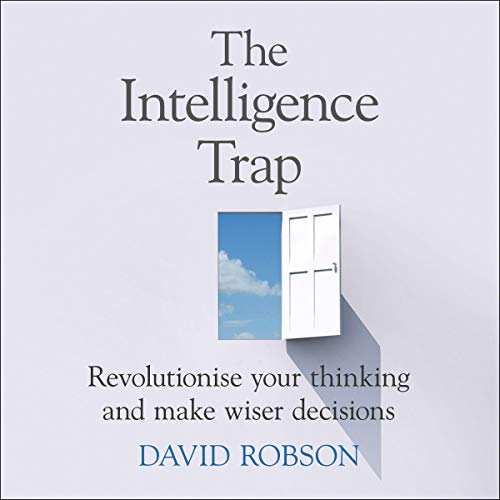
The Intelligence Trap
4.5 Stars 26 Ratings
Strategies for avoiding cognitive traps:
- Actively seek disconfirming evidence before making important decisions
- Recognize when emotions or ego are driving your choices instead of logic
- Build decision-making systems that counteract natural biases automatically
- Practice epistemic humility by acknowledging the limits of your expertise
The book introduces strategies for improving decision-making: actively seeking disconfirming evidence, recognizing when emotions are driving choices, and building systems that counteract natural biases. Entrepreneurs who need to make high-stakes decisions with incomplete information will find The Intelligence Trap teaches you to think more critically about your own thinking, which is essential when every decision affects your business’s survival and growth.
Power Dynamics And Influence
Power exists in every human interaction, whether acknowledged or not. Understanding power dynamics helps you navigate office politics, negotiate from positions of strength, and avoid being manipulated by those who understand these principles better than you do. Power isn’t inherently good or evil. It’s a tool that can be used ethically to create value or unethically to exploit others.
The psychology audiobook in this section provides a comprehensive framework for understanding how power operates in business, relationships, and society.
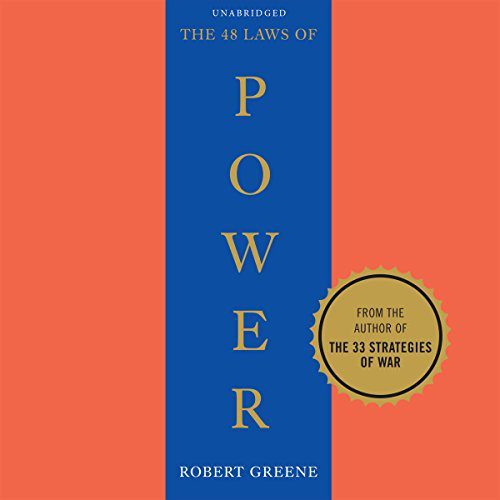
📘 The 48 Laws of Power — Robert Greene
Robert Greene’s The 48 Laws of Power distills centuries of historical examples into principles about how power is acquired, maintained, and lost. Greene examines figures from Caesar to Napoleon to modern business leaders, identifying patterns in how they navigated competition, built alliances, and outmaneuvered rivals. The laws range from strategic thinking to social psychology to understanding human nature.
Greene opens with Law 1: “Never outshine the master,” illustrated by Nicolas Fouquet, France’s finance minister who threw a lavish party that surpassed King Louis XIV’s own celebrations. The king felt threatened and had Fouquet arrested shortly after. The lesson: making superiors feel insecure, even unintentionally, invites destruction. Greene contrasts this with Galileo, who strategically credited the Medicis for his discoveries, securing patronage and protection. The book is filled with such examples showing that power dynamics operate by consistent psychological patterns. Research in organizational behavior confirms that perceived status threats are among the strongest motivators of workplace conflict.
48 Laws of Power
4.6 Stars 25,638 Ratings
Power dynamics principles from Greene:
- Never make those above you feel threatened by your success or talent
- Use strategic thinking to see several moves ahead in competitive situations
- Build alliances carefully by understanding what others truly want
- Recognize when power tactics are being used against you defensively
What makes The 48 Laws of Power controversial is its amoral approach. Greene presents power dynamics as they exist, not as they should be. Some readers view it as a manual for manipulation. Others see it as defensive knowledge, helping them recognize when these tactics are being used against them. Either way, understanding these principles provides insight into organizational behavior, competitive strategy, and why people act as they do when stakes are high. Use this knowledge ethically to protect yourself and build genuine influence rather than manipulate others.
Persuasion And Social Psychology
Persuasion is the foundation of business. You persuade customers to buy, investors to fund, partners to collaborate, and employees to stay. Ethical persuasion aligns what people want with what you’re offering rather than tricking them into bad decisions. Understanding the psychology of influence helps you craft messages that resonate, structure offers that feel valuable, and build trust that leads to long-term relationships.
The psychology audiobook in this section breaks down the core principles of persuasion backed by decades of research.
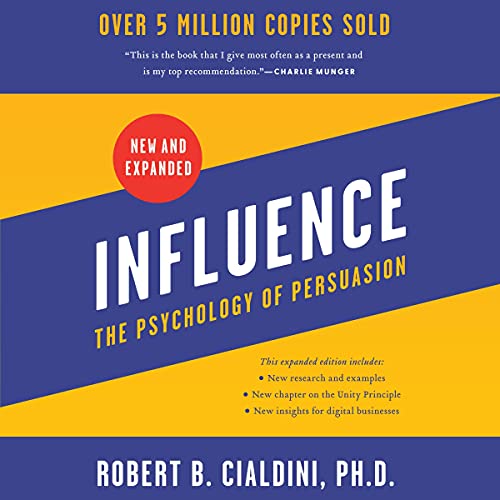
📘 Influence: The Psychology of Persuasion — Robert B. Cialdini
Robert Cialdini’s Influence: The Psychology of Persuasion is the definitive work on how people say yes and what drives compliance. Cialdini identifies six principles of persuasion: reciprocity, commitment and consistency, social proof, authority, liking, and scarcity. Each principle is grounded in psychological research and illustrated with real-world examples showing how these triggers operate in sales, marketing, and negotiations.
Cialdini spent three years going undercover in sales organizations, car dealerships, and fundraising operations to observe persuasion techniques firsthand. He describes a car dealership tactic: salespeople offer impossibly low prices to get customers to commit publicly, then “discover” errors that require price increases. Because customers already told friends they’re buying the car, consistency pressure makes them proceed despite the higher cost. Studies show that public commitments increase follow-through by 71 percent compared to private intentions. Cialdini also reveals that doctors’ compliance with hand-washing protocols jumped from 10 percent to 90 percent simply by posting signs appealing to social proof rather than health mandates.
Influence
4.7 Stars 2,425 Ratings
Six persuasion principles from Cialdini:
- Reciprocity: people feel obligated to return favors and concessions
- Commitment and consistency: public commitments drive follow-through behavior
- Social proof: people look to others’ actions to determine correct behavior
- Authority: credentials and expertise increase compliance with requests
- Liking: people say yes more to those they know, like, and trust
- Scarcity: limited availability increases perceived value
What makes Influence essential is its dual purpose. It teaches you to use persuasion ethically while also helping you recognize when others are using these techniques on you. Cialdini shows that persuasion works best when it’s genuine: offer real value, build authentic relationships, and demonstrate social proof through legitimate results rather than manufactured urgency. Anyone in sales, marketing, or leadership roles will find this important reading.
Emotional Intelligence And Awareness
Emotional intelligence is the ability to recognize emotions in yourself and others, understand how emotions influence behavior, and manage emotional responses strategically. High emotional intelligence helps you read rooms accurately, defuse conflicts before they escalate, build rapport quickly, and make decisions without letting temporary emotions override long-term goals.
The psychology audiobooks in this section provide frameworks for developing emotional intelligence and understanding deeper patterns of human nature.
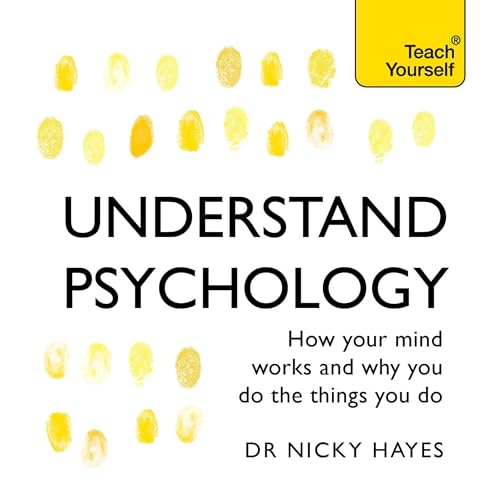
📘 Understand Psychology — Nicky Hayes
Nicky Hayes’s Understand Psychology offers a comprehensive introduction to psychological frameworks covering perception, memory, learning, social behavior, and personality. Hayes makes academic psychology accessible to general readers by focusing on practical applications rather than technical jargon. The book covers behaviorism, cognitive psychology, and social psychology in clear language with everyday examples.
Hayes explains classic experiments like Stanley Milgram’s obedience studies, where 65 percent of participants delivered what they believed were lethal electric shocks simply because an authority figure told them to. This demonstrates how situational factors override personal values more powerfully than most people realize. She also covers Solomon Asch’s conformity experiments showing that 75 percent of people will give obviously wrong answers when surrounded by a group giving the same incorrect response. These aren’t historical curiosities—they’re patterns that play out daily in business meetings, team decisions, and market behaviors.
Understand Psychology
No ratings
Foundational psychology concepts from Hayes:
- Conditioning principles explain how habits form and why behavior change is difficult
- Conformity and obedience studies reveal how social pressure overrides individual judgment
- Memory and perception research shows how easily our view of reality becomes distorted
- Motivation theories help predict what drives people’s choices in different contexts
Understand Psychology works well as a foundation for understanding how psychological principles apply to business contexts. Hayes explains conditioning, motivation theories, group dynamics, and decision-making processes that help you interpret why people act as they do in professional settings. Anyone wanting a structured overview of psychology before diving into specialized topics should start here.
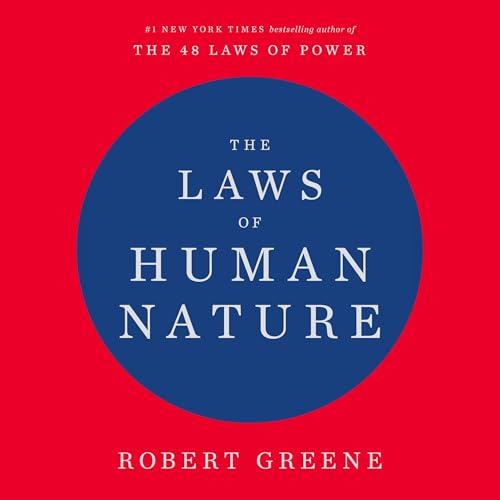
📘 The Laws of Human Nature — Robert Greene
Robert Greene’s The Laws of Human Nature explores the patterns and drives that shape behavior across cultures and centuries. Greene examines envy, aggression, narcissism, and other traits that create predictable responses in social situations. The book teaches you to read people’s true intentions beneath their words by paying attention to body language, emotional signals, and behavioral patterns.
Greene tells the story of Anton Chekhov, the Russian writer who developed deep insight into human nature by working as a doctor. Chekhov learned that people’s stated motivations rarely matched their actual drivers—patients would claim one concern while their symptoms revealed entirely different fears. This taught him to observe what people do rather than what they say. Greene writes: “The greatest danger you face is your assumption that other people think the way you do, share your values, and operate by your rules of fairness and honesty.” Research in behavioral economics confirms that people systematically misjudge others’ motivations, assuming more similarity than actually exists—a bias that costs businesses billions annually in failed partnerships and hiring mistakes.
The Laws of Human Nature
4.8 Stars 14,898 Ratings
Human nature patterns from Greene:
- People’s actions reveal true motivations more accurately than their words
- Envy and status anxiety drive more business behavior than rational calculation
- Self-awareness is the foundation for accurately reading others
- Emotional intelligence requires recognizing your own biases and triggers first
What makes The Laws of Human Nature valuable is its emphasis on self-awareness. Greene argues that understanding others starts with understanding yourself: your own biases, triggers, and blind spots. By recognizing how emotions and social pressures influence your decisions, you gain the clarity needed to assess situations objectively. Entrepreneurs building teams, negotiating deals, and navigating complex business relationships where reading people accurately determines outcomes will find this essential.
Applying Behavioral Insights Professionally
Psychology audiobooks only create value when you apply behavioral insights to real situations. The concepts work in sales conversations, team management, partnership negotiations, and strategic planning. After listening to psychology audiobooks, identify three patterns you’ve observed in your own behavior or business interactions that align with the principles discussed.
For example, if you noticed that your best sales come from referrals, that validates social proof as a persuasion principle. If you’ve lost deals because you didn’t build enough rapport first, that highlights the importance of liking and trust-building. Connecting theory to your lived experience makes the knowledge stick and helps you spot opportunities to apply it going forward.
🧠 Using Emotional Intelligence for Better Decisions
Emotional intelligence improves decision-making by helping you separate temporary feelings from long-term strategy. When you feel angry, anxious, or overly optimistic, pause before making important choices. Ask yourself whether the decision aligns with your goals or whether emotions are distorting your judgment. Build systems that slow down emotional reactions: mandatory waiting periods before big purchases, decision frameworks that force you to list pros and cons objectively, or trusted advisors who challenge your thinking.
Emotional intelligence also helps you understand what’s driving other people’s decisions. When a client hesitates, is it price objections or trust concerns? When a team member underperforms, is it skill gaps or motivation issues? Reading emotional cues accurately allows you to address root causes rather than surface symptoms, which leads to better outcomes for everyone involved.
🚫 Psychology Mistakes Cheat Sheet
Even people who study human behavior fall into psychological traps that sabotage their effectiveness. Use this cheat sheet to identify and fix the most common mistakes that damage relationships, kill deals, and undermine your influence.
| Psychology Mistake | Why It Undermines Success | The Fix |
|---|---|---|
| Assuming others think like you do | You build products nobody wants and make offers that don’t resonate | Study your customers’ actual motivations through interviews and observation |
| Ignoring nonverbal communication | You miss critical information about trust, objections, and emotional states | Watch body language and tone as closely as you listen to words |
| Using logic when emotions drive decisions | Your rational arguments bounce off emotional resistance | Address the emotional barrier first, then support with logic |
| Making decisions when emotions run high | Anger, anxiety, or euphoria distort your perception of risk and opportunity | Build mandatory waiting periods before important choices |
| Projecting confidence without building competence | People see through false authority and you lose credibility permanently | Develop real expertise before positioning yourself as an authority |

Book Comparison Table
| Book | Author | Best For | Length | Key Takeaway |
|---|---|---|---|---|
| The Intelligence Trap | David Robson | Avoiding cognitive biases and improving critical thinking | 10 hours | Intelligence without awareness of biases leads to poor decisions |
| The 48 Laws of Power | Robert Greene | Understanding power dynamics and strategic thinking | 23 hours | Power operates by predictable patterns across all human interactions |
| Influence: The Psychology of Persuasion | Robert Cialdini | Ethical persuasion and recognizing manipulation | 7.5 hours | Six principles drive compliance when used authentically |
| Understand Psychology | Nicky Hayes | Foundational psychological concepts and frameworks | 12 hours | Psychology provides practical tools for understanding behavior |
| The Laws of Human Nature | Robert Greene | Reading people and developing self-awareness | 28 hours | Understanding yourself is the key to understanding others |
Start Here: Your 3-Step Action Plan
Step 1: Identify Your Behavioral Blind Spot Choose the psychology audiobook that addresses your weakest area. Struggle with reading people? Start with The Laws of Human Nature. Make poor strategic decisions? Try The Intelligence Trap. Need better persuasion skills? Go with Influence. Don’t try to master everything at once. Focus on your biggest gap first.
Step 2: Track Patterns in Real Interactions Create a simple observation log on your phone or notebook. After each important conversation, meeting, or negotiation, note one psychological pattern you observed. Did someone use reciprocity by offering a favor first? Did groupthink prevent your team from challenging a bad idea? Did you notice confirmation bias in your own thinking? Recording these real-world examples helps you recognize patterns faster and builds your behavioral intuition over time.
Step 3: Test One Principle This Week Choose a single behavioral insight from the audiobook and deliberately apply it in a real interaction. Practice mirroring body language in your next meeting. Use scarcity ethically by offering a limited-time bonus. Seek out disconfirming evidence before making your next big decision. One applied principle teaches more than ten consumed passively.
Start Building Your Psychology Knowledge Today
Understanding people drives business success. The five psychology audiobooks in this guide provide frameworks for reading behavior, influencing ethically, and making better decisions by understanding the hidden forces that drive human action. You don’t need all five to start seeing results. Choose the one that addresses your biggest challenge and commit to applying what you learn.
This is the final post in the “25 Audiobooks To Master 5 High-Income Skills” series. You now have curated recommendations across productivity, communication, finance, business, and human behavior. These aren’t random book lists. They’re strategic frameworks for developing skills that directly increase your earning potential and career trajectory.
Solopreneurs and entrepreneurs who master these five skill areas build sustainable businesses faster than those who focus on tactics without developing foundational capabilities. Psychology audiobooks help you understand the one variable that determines all business outcomes: people.
Add these to your playlist and start mastering this skill today.
🎧 This completes the “25 Audiobooks To Master 5 High-Income Skills” series.
Revisit the full series:
- Part 1: Productivity Audiobooks — Master focus, time management, and habits
- Part 2: Communication Audiobooks — Improve charisma, persuasion, and influence
- Part 3: Personal Finance Audiobooks — Build wealth and financial literacy
- Part 4: Business Audiobooks — Learn strategy, leadership, and execution
- Part 5: Psychology Audiobooks — Understand human behavior (you are here)
Apply what you’ve learned, and level up one audiobook at a time.