- Introduction: Making Money but Still Broke? You’re Not Alone — and You’re Not Crazy
- 1. The Paycheck Illusion: Why Income ≠ Wealth
- 2. Scarcity Mindset: The Invisible Financial Handcuff
- 3. Your Childhood Is in Your Wallet: Financial Trauma and Its Hidden Effects
- 4. Credit Shame Keeps You Quiet — and Stuck
- 5. Emotional Spending: When Your Wallet Is Regulating Your Nervous System
- 6. The Upper Limit Problem: Why You Sabotage When Things Get Better
- 7. The Financial Fog: Avoidance as a Coping Mechanism
- 8. Income Identity Crisis: You’re Earning Like a Boss, But Still Thinking Like You’re Broke
- 9. How to Break the Cycle and Start Building Real Wealth
- 10. Final Thoughts: You’re Not Bad With Money — You Just Need a New Map
Introduction: Making Money but Still Broke? You’re Not Alone — and You’re Not Crazy
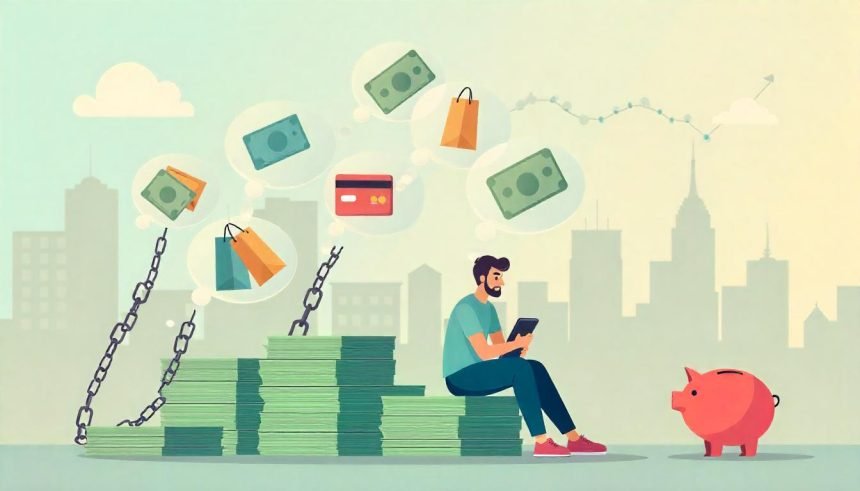
If you’re earning a decent paycheck but still feel like you’re drowning financially, you’re not broken — but your system might be. You work hard. You bring in income. Yet your bank account never seems to reflect it. The debt stays. The stress lingers. The future feels… uncertain.
In 2025, with inflation still squeezing essentials and wages struggling to keep up, more people than ever are realizing that income doesn’t equal financial freedom. Even high earners are stuck living paycheck to paycheck, burdened by credit shame and paralyzed by the invisible weight of scarcity thinking.
So what’s really going on?
Let’s unpack the uncomfortable truth — the emotional and psychological reasons why you stay broke even when you’re making money.
1. The Paycheck Illusion: Why Income ≠ Wealth
One of the most dangerous lies we’ve been sold is that earning more will automatically fix our financial problems. But here’s the reality:
- Wealth is not what you earn; it’s what you keep.
- Most people don’t have an income problem — they have a money management and mindset problem.
- Without internal change, every income increase becomes a bigger version of the same problem.
This is especially true in the current economy, where rising living costs and aggressive consumer marketing make it incredibly easy to “upgrade” your life at every raise… without actually improving your financial position.
Lifestyle creep is real.
You go from ramen to restaurants, beat-up Honda to luxury lease — and suddenly your new “normal” is just as paycheck-to-paycheck as your old one.
💡 Check-in moment: If your income doubled today, how would your life actually change long-term? Would you invest it — or inflate your lifestyle?
2. Scarcity Mindset: The Invisible Financial Handcuff
A scarcity mindset is like financial gravity—it always pulls you down, no matter how hard you try to rise.
Even if you’re making decent money, if you’re operating from fear of loss or “never enough,” you may find yourself:
- Spending impulsively just to feel safe
- Hoarding money and never investing
- Avoiding financial planning altogether
- Staying in survival mode even when your situation improves
This mindset is not your fault. It’s conditioned — by childhood experiences, cultural beliefs, or even systemic inequality. But it’s your responsibility to rewire it.
In 2025, with many people still recovering from the long tail of post-pandemic financial instability, scarcity is being reinforced everywhere: rent hikes, grocery bills, AI-related job insecurity.
That fear is real. But staying in it will cost you more than inflation ever could.
3. Your Childhood Is in Your Wallet: Financial Trauma and Its Hidden Effects
Let’s get real: most people weren’t taught how to build wealth — they were taught how to survive.
If you grew up with:
- Parents fighting about money
- Utilities getting shut off
- Creditors calling the house
- Shame tied to spending or asking for help
… then your brain learned early that money = danger, shame, instability, or confusion.
This is called financial trauma, and it’s still running the show in your adult life — even if you make six figures now.
You might:
- Avoid checking your bank account
- Feel guilt when you buy something nice
- Self-sabotage when you start saving or getting ahead
- Think you’re bad with money, when really you just inherited fear and chaos
Until that trauma is acknowledged and healed, no budget or side hustle can fix the root problem.
4. Credit Shame Keeps You Quiet — and Stuck
Your credit score doesn’t define your worth, but it sure can shape your life. And when it’s low, it often triggers deep shame.
In 2025, many Americans will see their credit scores dip not because they’re irresponsible but because they’re overleveraged, underpaid, or recovering from financial emergencies.
But what does shame do?
- It makes you avoid your credit reports.
- It stops you from seeking help or disputing errors.
- It reinforces the belief that “I’m just bad with money.”
That silence is deadly. Because credit isn’t just about buying a house — it affects your ability to rent, get a car, even land some jobs. And if you feel stuck in a cycle of bad credit, you might assume you’re not meant to be wealthy.
Let’s be clear: bad credit is not a character flaw.
It’s a symptom. And it’s fixable — but only if you’re willing to face it.
5. Emotional Spending: When Your Wallet Is Regulating Your Nervous System
Have you ever had a bad day and ordered takeout, bought something online, or gone out for drinks just to feel better?
You’re not alone.
Emotional spending is a form of self-soothing.
When stress, anxiety, loneliness, or even boredom strikes, shopping activates dopamine, your brain’s feel-good chemical.
But here’s the trap:
- The relief is temporary.
- The financial consequences are long-term.
- The cycle feeds guilt → shame → more emotional spending.
Emotional spending becomes more common during times of economic stress—like the current inflationary pressure in 2025. People crave relief, joy, or control when the world feels uncertain.
But when your money becomes your medicine, your bank account becomes the casualty.
🔁 “Retail therapy” is only therapeutic until the credit card statement arrives.

6. The Upper Limit Problem: Why You Sabotage When Things Get Better
Ever notice how something always seems to go wrong when you start getting ahead?
- You get a bonus → suddenly, car trouble
- You pay down your debt → and rack it back up
- You start saving → then feel “bored” and go shopping
This isn’t random. It’s called The Upper Limit Problem, a concept coined by psychologist Gay Hendricks. It happens when your subconscious feels unsafe or undeserving of sustained success.
If you grew up around struggle, your nervous system may be wired for chaos. So when things get calm? You unconsciously stir the pot.
It sounds wild, but your brain thinks it’s protecting you by keeping you in familiar (even if painful) territory.
💬 If wealth feels unfamiliar or threatening, your brain will sabotage to bring you “home.”
7. The Financial Fog: Avoidance as a Coping Mechanism
Sometimes, the real problem isn’t that you’re broke — it’s that you don’t actually know how broke you are.
Avoidance is one of the most common money habits in people with financial anxiety or trauma. You might:
- Not know your exact debt total
- Ignore your bank statements
- Delay opening bills or filing taxes
- Rely on hope and guesswork instead of a plan
In 2025, with economic uncertainty swirling, avoidance can feel like a protective buffer. But in reality, it’s the fastest way to dig deeper.
Clarity is power. Even if the numbers suck, knowing them gives you agency. Avoidance robs you of that.
8. Income Identity Crisis: You’re Earning Like a Boss, But Still Thinking Like You’re Broke
This one hits hard.
Even after increasing income, many people still operate with a broke mentality. That means:
- Undervaluing your time
- Being overly frugal or penny-pinching
- Making fear-based decisions instead of strategic ones
- Feeling uncomfortable with success
Your money mindset has to evolve with your income — or you’ll sabotage it.
Here’s a truth bomb:
💥 You can’t build wealth with a poverty operating system.
9. How to Break the Cycle and Start Building Real Wealth
Enough with the shame spiral. Let’s talk strategy.
Breaking out of the paycheck-to-paycheck trap — even at a decent income — requires more than budgeting. It takes inner rewiring and external systems. Here’s a starter roadmap:
🔄 Rewire Your Mindset
- Journal on early money memories and patterns
- Replace scarcity affirmations with abundance truths
- Surround yourself with people who talk about building, not just surviving
🧠 Build Financial Self-Awareness
- Audit your spending habits — especially emotional triggers
- Set calendar reminders to check in weekly on finances
- Know your credit score — and track progress monthly
⚒️ Create Simple, Non-Negotiable Systems
- Auto-transfer a % of income into savings
- Use cash or debit for “emotional” spending categories
- Set boundaries: don’t lend money you can’t afford to lose
📈 Raise Your Financial Set Point
- Read books, follow financially conscious creators
- Celebrate small wins (e.g., “I saved $100!”)
- Visualize your future — not just debt freedom, but true financial peace
10. Final Thoughts: You’re Not Bad With Money — You Just Need a New Map
If you’ve read this far, then it means you’re ready to stop surviving and start stacking your wealth — emotionally, mentally, and financially.
You’re not broke because you’re lazy. You’re not stuck because you’re stupid.
You’re here because you’ve been repeating patterns that were never designed to build wealth.
2025 is a tough economy, no doubt. But you’re tougher.
And the moment you decide to rewire what’s beneath your money habits, everything above the surface will begin to shift.
You’ve got this. You’re not alone.